Author: Mike Simone

  • 6 moves to do before even getting out of bed

    6 moves to do before even getting out of bed

    There are very few things that come before coffee. These six moves get a pass.

    We all wake up achy or stiff from time to time. Sometimes it’s from a serious workout, other times it’s stress, or it can even be a combination of the two. From personal experience: if I spend several hours surfing on Sunday, Monday morning is going to be off to a sluggish start.

    In a recent MorningRep poll on Twitter, 59% of respondents indicated they “sometimes” experience aches and pains while 36% responded that they “quite frequently” experience ailments. A follow up poll found that 49% typically experience discomfort in the hips and low back while 28% said it’s their shoulders and neck.

    While pain is sometimes part of the game, there are supplemental things you can do to help alleviate it.

    Instead of slowly rolling out of bed, slowly roll yourself into these positions. They not only act as a physical primer to start your day, but also a mentally relaxing one as well.

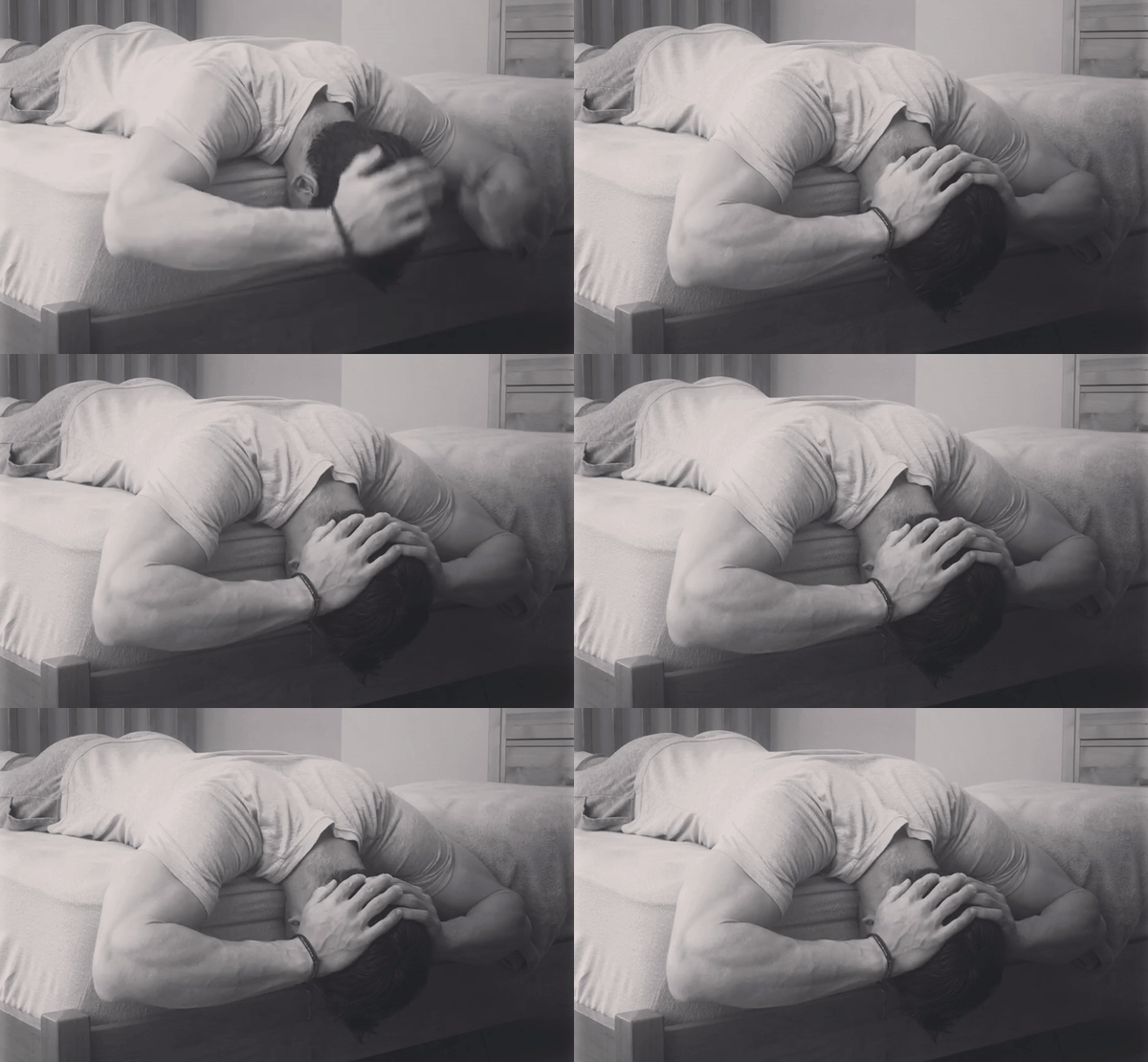
    1. Forward neck hang

    Carefully hang your neck forward off the bed. Gently pull your head down and hold for 5-10 seconds. Rotate your head to each side and hold for 5-10 seconds.
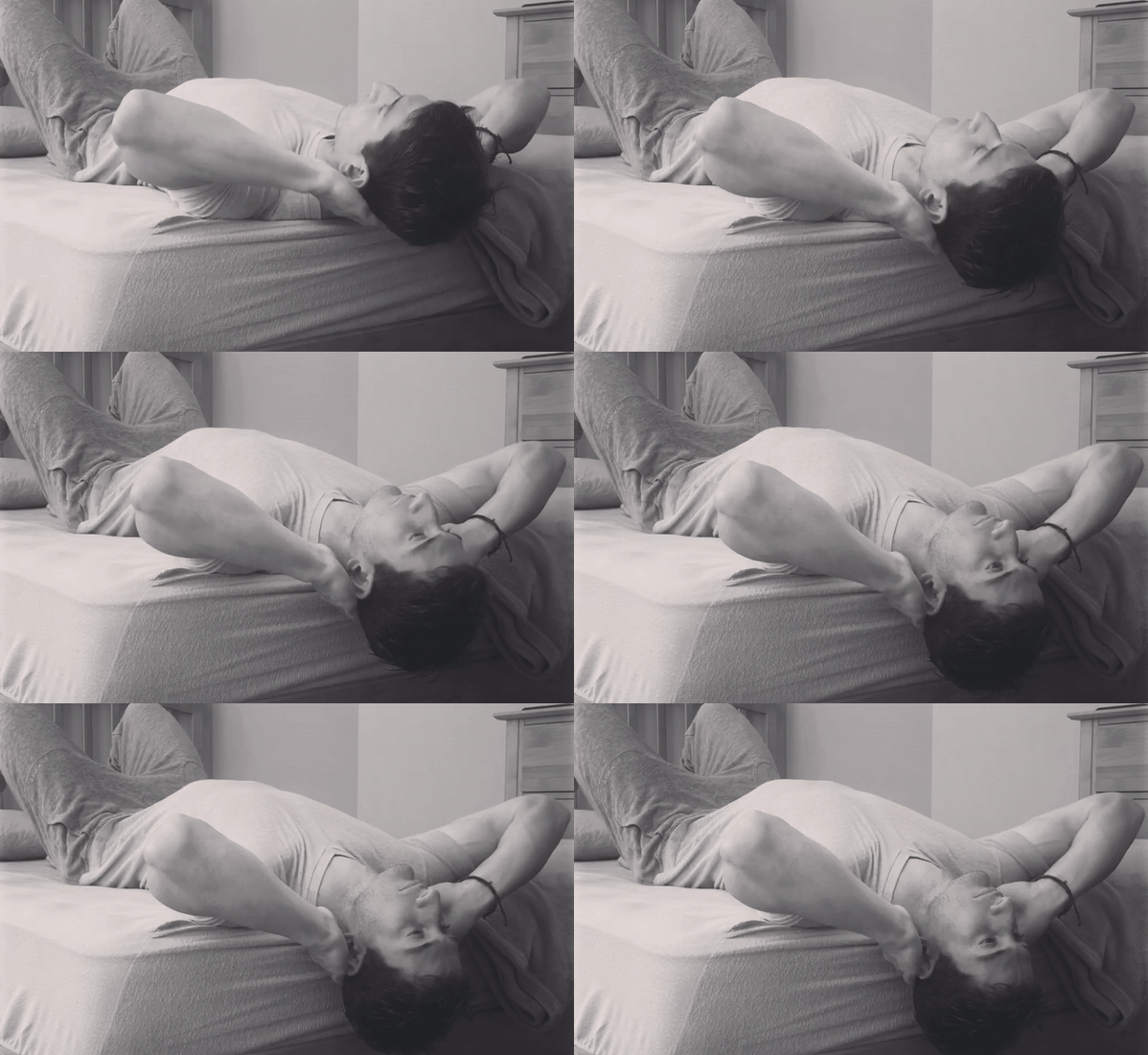
    2. Reverse neck hang

    Carefully hang your neck backwards off the bed. This counteracts all of the forward leaning we all do day-in and day-out. Just think about all the texting and reading on your phone, being hunched over the computer, etc. The same process for the forward neck hang applies here. When complete, use your hands to assist your neck and head as you sit back up.
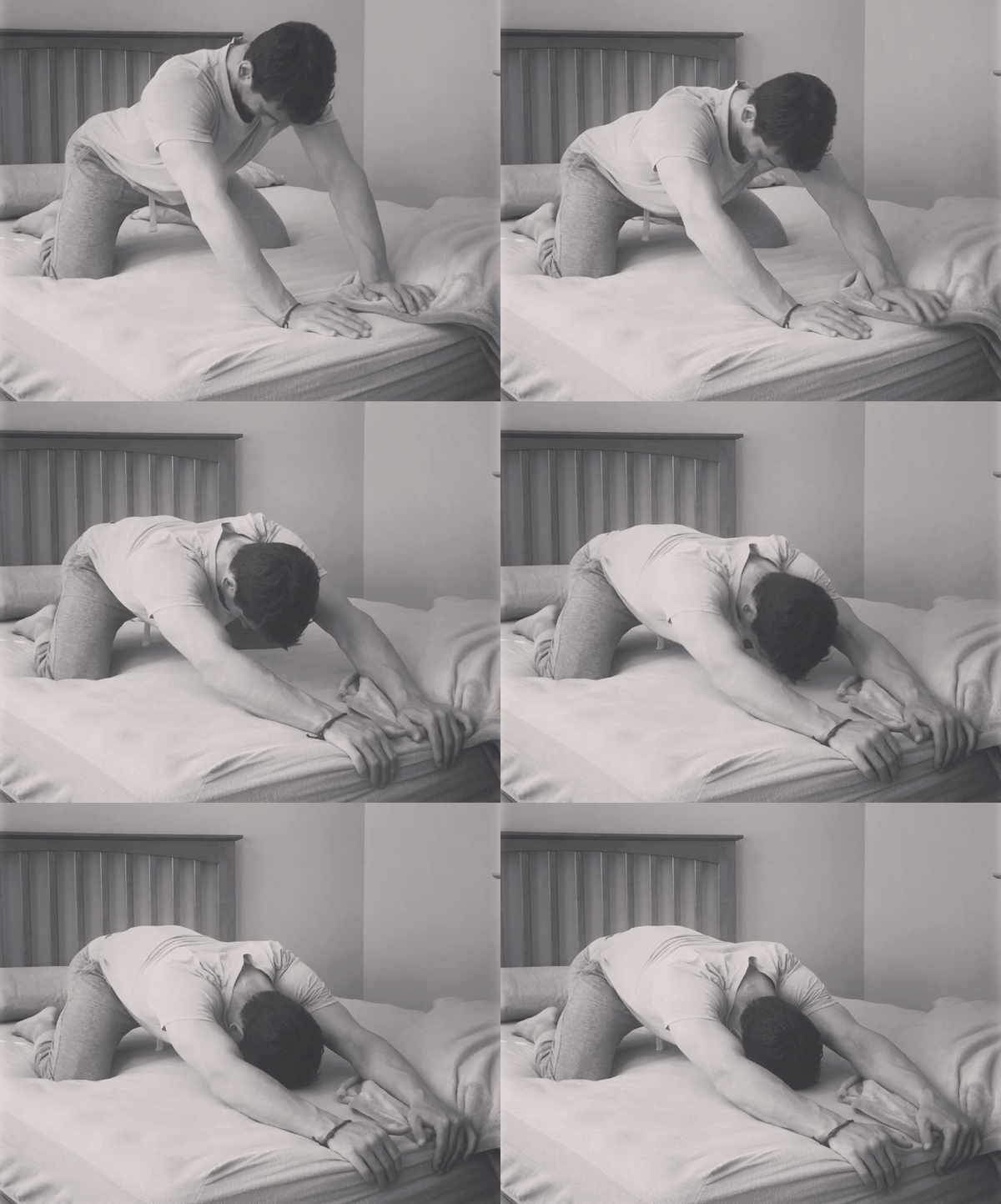
    3. Child’s pose

    From your hands and knees, slowly drop your butt back while spreading and sinking your knees closer to the bed. As you’re doing this, lean your upper body forward and stretch your arms and shoulders out in front as much as you can. This will give your hips and shoulders the wake up call it needs. Hold in your deepest position for 10-20 seconds, release and repeat 5-10 times.
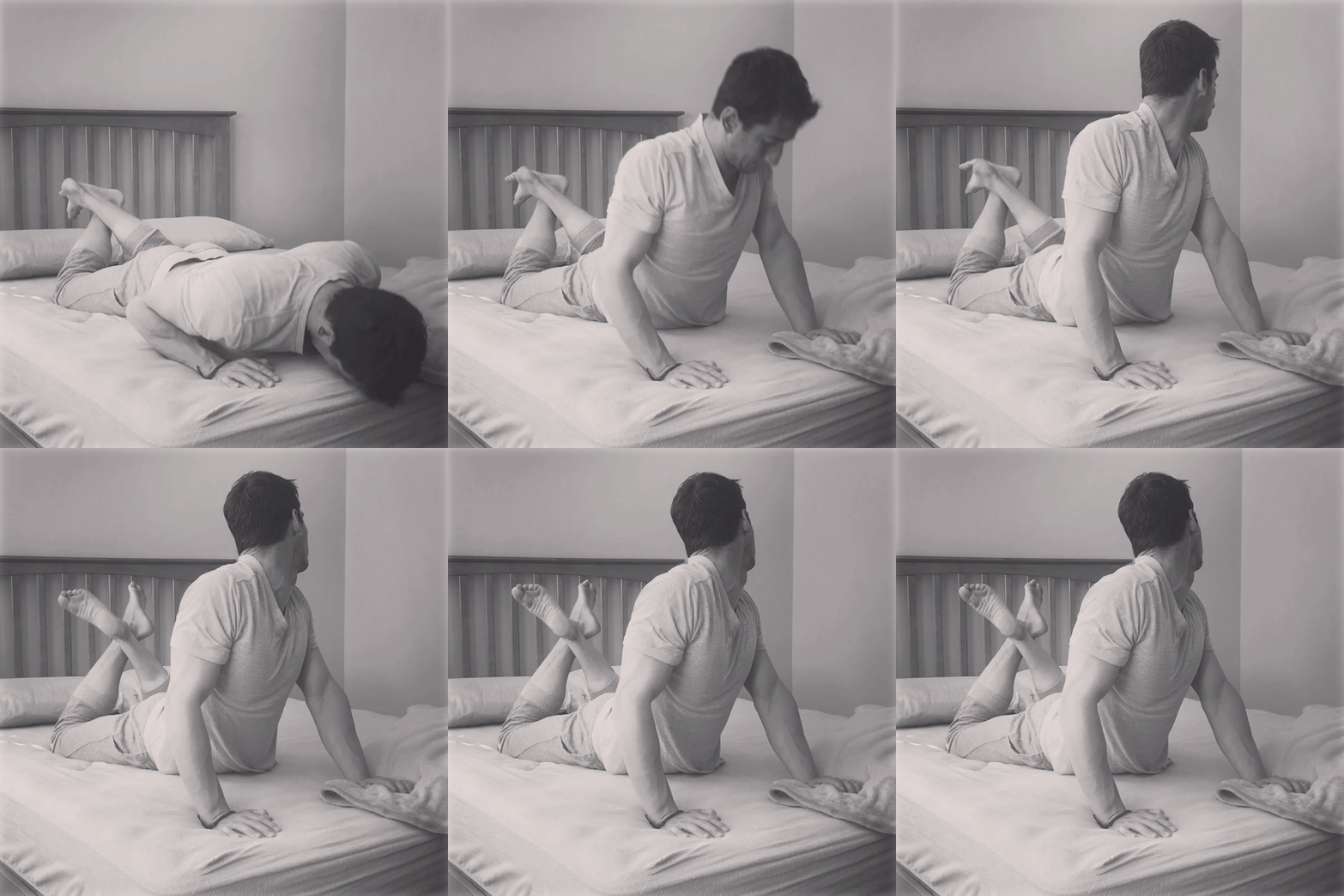
    4. Bodyboarder’s pose

    Lying on your stomach, plant your hands in front of you and pull your chest up while retracting your shoulder blades. At the same time, lift and cross your legs while gently trying to draw your feet to your shoulders. You’ll feel this in your upper and lower back. Hold this for 5-10 seconds. Rotate your neck to the left for 5-10 seconds, then to the right, hold for 5-10 seconds.
    5. Lying hamstring and hip stretch

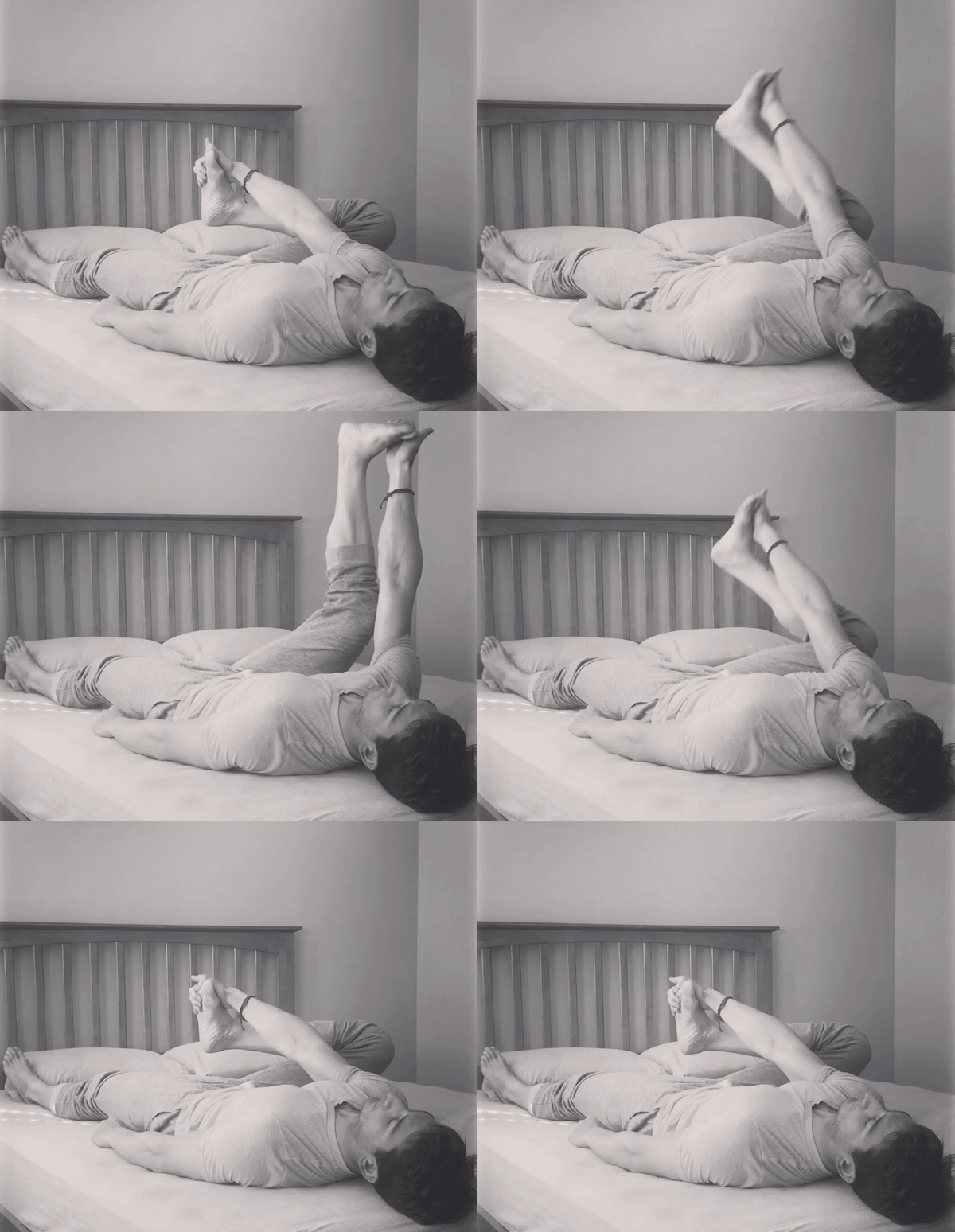
    Lying on your back with your left leg flat on the bed, bend and pull your right knee as close to your head and chest as possible. Grab the outside of your foot with your right hand. You should feel a serious stretch in your hamstring. Slowly rotate your knee outward to the right while continuing to pull in towards your body, this will engage your hips. Hold for 5-10 seconds and release. Then, slowly attempt to straight your knee with your foot to the sky while continuing to hold your foot. Hold for 5-10 seconds. Release and repeat on the opposing side. You’ll feel this in your hamstrings, hips, and glutes at different points in the process. Repeat on each leg 3-5 times.
    6. Overhead scap/lat retractions with lung expansion

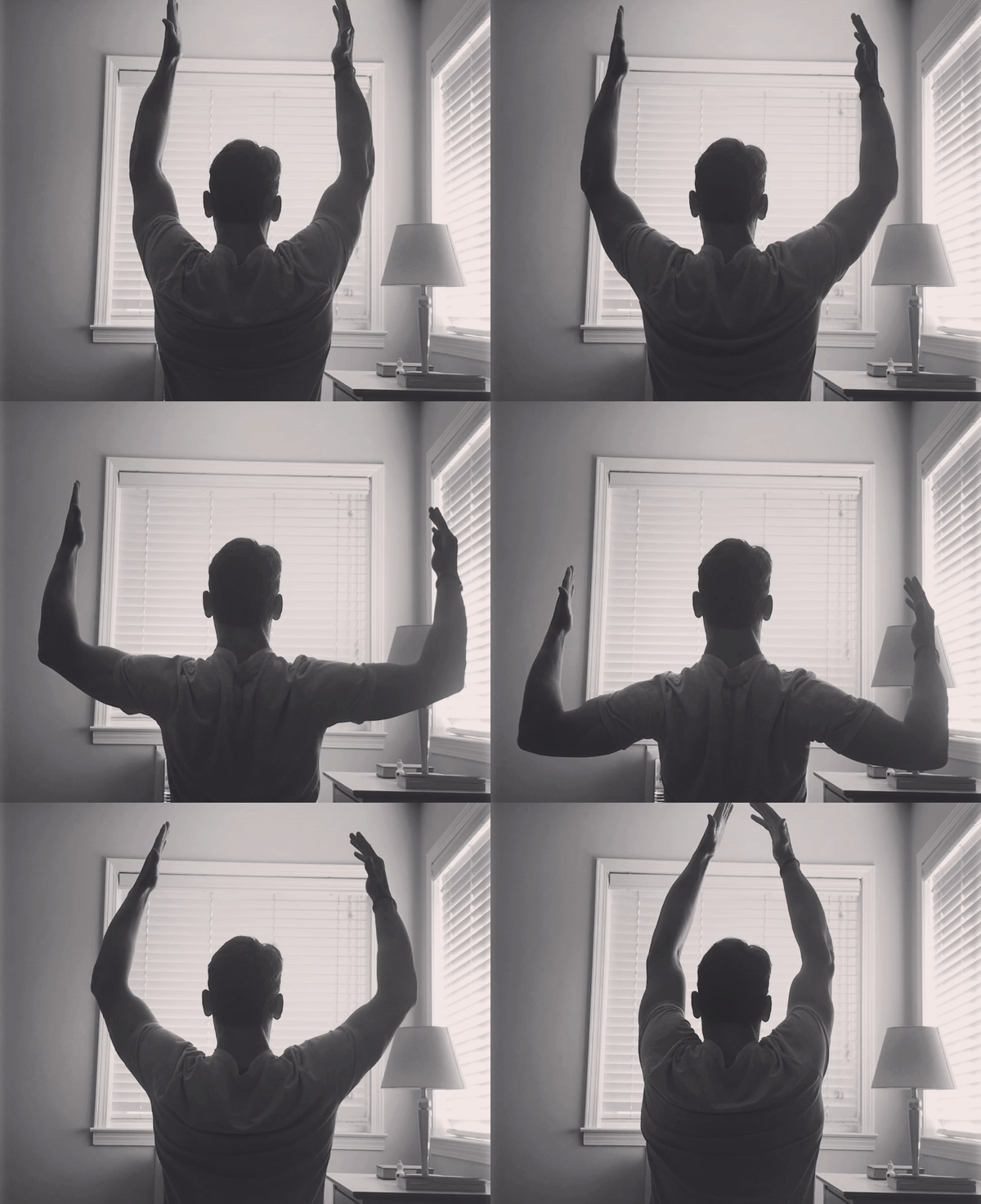
    Sit as upright as possible with your feet off the bed and flat on the floor. Reach your hands and arms as high up as possible. Now, imagine you are holding the bar of a lat pulldown machine. Pull that invisible weight down and back as far as possible. Your lats should be engaged. Squeeze your shoulder blades together. Fill your lungs as much as possible as the top and release slowly as you pull down. Completely empty them at the bottom. Hold for 5-10 seconds. Release and repeat 5 times.
  • Find the fittest looking person in your office and challenge them to this workout

    Find the fittest looking person in your office and challenge them to this workout

    No matter how much you love your job, spending 8, 10, 12 or more hours on the hustle can wear even the most resilient executive down. That’s why we all need to be weekend warriors with hobbies and a solid workout regimen to balance out the stress, prevent burn out, and reinvigorate productivity. This is what keeps the creative, high-powered ideas flowing and successful people moving forward.

    Related: The most high-value snacks for your office—and the ones you should fire

    Aside from building up the body and mind with fitness, as any strong leader knows, the same goes for building a team. A leader is only as a effective as the support system underneath him. As for two junior associates, while indirectly competitors by default, both can make their office rivalry less personal and more beneficial to the team by getting closer.

    While a round of golf is more relaxing, a workout challenge is a struggle the two of you will share and bond over. One may leave the other in the dust, but both still need to push through the uncomfortableness of it all.

    The following workout is ideal for colleagues for two reasons:

    The movements are basic, but not overly easy. And, it’s goal-oriented.

    The 500-repetition inter-office challenge

    Time:
    Friday at 5. (Or, Thursday if you’d prefer to get the hell out of dodge on Friday)

    Marching Orders:

    • For CEOs/Executives and Directors, complete 50 repetitions of each exercise before moving onto the next.
    • For Associates, Jr. Associates, and Assistants, complete 30 repetitions of each exercise before moving onto the next.
    • For Interns, complete 15 repetitions of each exercise before moving onto the next.

    Hell, who are we kidding? Those interns will probably smoke everyone. It’s 50 reps for everyone, company-wide.

    Reporting: 
    Fastest to complete, wins

    Award:
    The winner is exempt from buying drinks.

    Here’s to making the office competition healthier.

    Watch fitness expert and HFP contributor, Wyatt Krueger, demonstrate with ease.

    Have an office fitness rival? Is fitness and health a big part of your company’s culture? Post up a photo of Bob from Accounts Payable squatting his weight in pay stubs on social using the #humanfitproject. Who knows? Your story could get featured.

  • This 5-day bodybuilding split is a timeless classic

    This 5-day bodybuilding split is a timeless classic

    Working out has gotten so complex. So many classes, so many new pieces of equipment, supplements—even the clothing. Options are great, but sometimes you just need someone to give it to you straight. If your number one goal is to build muscle and burn fat to look and feel better—at the end of the day—you’re bodybuilding. Like I said, there’s many different ways to get there but this is a surefire, straight-forward way of getting it done—and very effectively.

    More into athleticism than aesthetics? Try our 3-day Contender’s Plan for high-performance athletes

    The Workout Plan

    DAY 1 – Chest & Back 1


    1. Barbell Chest Press 4 x 8 rest 90 sec
    2. Cable Pulldowns 4 x max rest 90 sec
    3. Barbell Incline Press 4 x 10 rest 60 sec
    4. Barbell Bent Over Row 4 x 10 rest 60 sec
    5. Push Ups 3 x 10 rest 45 sec
    6. V-Bar Cable Row 3 x 10 rest 45 sec
    7. Hip Thrust 3 x max rest 60 sec

    DAY 2 – Legs 1


    1. Barbell Squat 4 x 8 rest 90 sec
    2. Plie Squat 4 x 10 rest 60 sec
    3. Barbell Romanian Deadlift 4 x 8 rest 90 sec
    4. Dumbbell Lying Hamstring Curl 3 x 10 rest 60 sec
    5. Barbell Bridge Off Bench 3 x 10 rest 45 sec
    6. Standing Calf Raise 4 x 8 rest 45 sec
    7. Rope Cable Crunch 3 x 12 rest 60 sec

    DAY 3 – Shoulders & Arms


    1. Standing Military Press 4 x 8 rest 90 sec
    2. Standing Dumbbell Lateral Raises 4 x 10 rest 60 sec
    3. Standing Dumbbell Arnold Shoulder Press 3 x 10 rest 60 sec
    4. Standing Barbell Bicep Curl 4 x 10 rest 60 sec
    5. Barbell Bench Tricep Skull Crushers 4 x 10 rest 60 sec
    6. Seated Dumbbell Hammer Curl 3 x 10 rest 45 sec
    7. Bench Dips 3 x 10 rest 45 sec
    8. Plank 3 x 60 sec rest 30 sec

    DAY 4 – OFF

    DAY 5 – Chest & Back 2


    1. Dumbbell Incline Chest Press 4 x 10 rest 60 sec
    2. Dumbbell Flat Chest Press 3 x 12 rest 60 sec
    3. Dumbbell Incline Chest Fly 3 x 12 rest 60 sec
    4. Chin Ups 4 x 10 rest 60 sec
    5. Incline Bench Dumbbell Row 3 x 12 rest 60 sec
    6. Single Arm Dumbbell Row 3 x 12 rest 45 sec
    7. Weighted Bench Hip Thrusts 3 x 12 rest 60 sec

    DAY 6 – Legs & Abs 2


    1. Barbell Walking Lunges 3 x 12 per leg rest 60 sec
    2. Narrow Barbell Squats 3 x 12 rest 60 sec
    3. Dumbbell Reverse Lunges 3 x 12 rest 60 sec
    4. Single-leg Standing Calf Raise 3 x 15 rest 45 sec
    5. Barbell Shrugs 4 x 8 rest 60 sec
    6. Dumbbell Seated Shrugs 4 x 10 rest 45 sec
    7. Weighted Crunch 3 x 12 rest 45 sec

    DAY 7 – OFF

    *This program was originally produced by HUMANFITPROJECT for Men’s Fitness magazine.

  • How to get (or keep) shredded abs when you’re out of commission

    How to get (or keep) shredded abs when you’re out of commission

    High-intensity exercise and clean eating are the answer to abs, right? Right. But what happens if you’re injured or sick and completely out of commission? Here’s the deal:

    When I came off a SLAP tear repair surgery it meant no use of the shoulder for months, not even any running or lower-body work. Luckily for me I went into it in shape and just needed to keep it all together. So if you’re out of commission, these tips have been tested to get you through. If you’d like to hear more about the shoulder surgery click here.

    Evaluate your food consumption situation

    Fancy word and terminology for “eat based on what you do.” As an active person, consuming small portions of carbs throughout the day and fats later in the evening can be very effective for building muscle and keeping off fat. But if you’re slowed down (or sitting in an office chair for eight-plus hours per day), it’s recommended to slash back on both of those particular macronutrients in small increments, but do it slowly so you don’t get cravings the first week of trying it out. Eventually you’ll find the balance.(Secret trick: Swap out the morning oatmeal for wheat puffs to drop your carbs by 30-40%

    …but don’t go skimping on protein

    This is one macronutrient you can’t afford to lose. Keep getting in a protein shake each day. It acts as a nice meal replacement, and protein will help preserve muscle. Buy some BCAAs, there’s a good amount of research that supports BCAA usage for preserving, building, and rebuilding muscle mass.

    Drink water like it’s your job

    Water fills you up, and it makes you far less hungry throughout the day. As much as you might forget, get that water in your system. You’ll notice the difference.

    Find sh*t to do, pronto

    Lounging around is terrible because you get bored, and when you get bored, you eat. You’ve got to think of something to kill the time instead of crushing food and binge watching whatever trendy show that it is everyone won’t shut up about.

    Steal a strategy from the bodybuilder’s playbook

    Perform isometrics and poses. Sit there and crunch your abs, all day, five sets of 60-second holds as many times as you can think of throughout the day. Do it at your desk, in a meeting, driving home, in a cab, on a train, you name it. (Who cares if you look like a weirdo in public). Stay tuned for our “secret workout” story…

  • I can’t take a selfie, but my workouts are 20x better now

    I can’t take a selfie, but my workouts are 20x better now

    I broke one of my own rules.

    My phone was to always remain in the car. Always. No exceptions. For 1-2 hours, I was to be completely disconnected from everything with the exception of the environment of the gym. Sometime over the last 5 or so years, I broke that rule and it has impacted my training. At first, it wasn’t obvious, but over time, I think it started to add up. Let me explain: say I trained at an intensity of “10” my whole gym-going career, now I was training at an intensity of “8” because of little distractions through my sessions. Weeks, months, and years go by of reduced intensity and focus… that’s not how I go my conditioning to where it is.

    The No Phone Test

    This thought came into mind after a few weeks of feeling sluggish and at a plateau. I decided to conduct an experiment on myself. I went back to my no phone rule for a couple days. I explicitly remember doing it during an upper body workout and a lower body workout. It was a Monday and a Wednesday. I loaded up my iPod shuffle. Yes, an iPod shuffle. The phone stayed in the car. Not even in the locker or the bag, the car. That way I wouldn’t be tempted to check an email. I started off with some warmups and was already feeling way more in zone. On to bench presses on the upper body day and squats after hip swings on lower body day. Every rep, every set was just as good as the next. Focus and intensity were on point. I was also much more consciously aware of my rest periods, 30 seconds meant 30 seconds, not 35, not 45… 30 seconds. At the end of the week of workouts I had experienced pumps in the muscles that I hadn’t felt in a while and that post-workout endorphin “high” that I had almost forget even happened after a solid session.

    After a week or so of the “no phone in the gym rule” I went back to bringing my phone in as I had been. Back to checking emails and responding to text messages in between sets. And as expected, I was much more disconnected. The focus just wasn’t there. The intensity wasn’t there, and rest periods were slipping a little longer. That damn phone became a distraction again.

    The No Phone Test Takeaway

    Your mind can’t be in multiple places at once, well, it can be in multiple places, but quickly jumbling back and forth—there’s no way you can focus on the main job at hand. That job is to work out and work out hard. No different than if you’re doing something at work (or driving a car!)

    Early in my fitness career I conditioned myself to eliminate distractions then somewhere down the road I reconditioned myself to think using the phone in the gym wasn’t a big deal when, in fact, it was.

    I’m obviously not breaking anything revolutionary here, but it might be worth trying for yourself, especially if you’re a beginner or someone who’s progress has come to a halt.

    Beginners need to find a real connection

    If you’re new to working out, you don’t have the experience under your belt to know your body, understand what it responds to and doesn’t respond to. You haven’t developed a system that works for you yet. For you, distractions need to be kept at a minimal, building that mind-muscle connection needs to happen. The mind-muscle connection is not some mumbo-jumbo—it’s a very real thing. Just as though anyone gets better at anything with practice, it’s no different with working out and understanding how to develop your body.

    Others might need to get reconnected

    If you’re not a beginner, but you’re still not happy with where you are: the same goes for you. Maybe you’re not focused enough. I mean, your diet could be God awful, but don’t think that lazy workouts don’t hurt either.

    If you think it’s ridiculous to sign on to the no phone in the gym rule, maybe airplane mode is a happy compromise. Remember, it’s only an hour. Make it count.

    Morale of the story: fewer gym selfies = more gains.

  • Supplemental exercises for enduring an ocean’s angry thrashing

    Supplemental exercises for enduring an ocean’s angry thrashing

    The ocean can be mesmerizingly beautiful—gentle offshore winds, groomed lines, and perfect green-blue tubes. That’s when it’s as good as it gets for any wave rider. But behind it’s beauty, is a potentially dangerous beast. And, on the other hand, there are times the beast isn’t hiding, and it can be downright scary just looking at it.

    Just when you feel like you’re comfortable with it, it gives you a good beating. Then blesses you with a wave of your life. Then again another good beating. No one is ever completely comfortable. And if they are, they are making a foolish mistake.

    The ocean is so hard to understand because it’s so unpredictable. To be “good” in the water, physical strength and endurance is one small piece—and experience can be understandably advantageous. But, when the unpredictable happens, only a calm and calculated mind can get you through.

    While you’re most likely not plotting on rushing a mountain of water at Nazaré or Mavericks, or scooping into a freight train in Puerto Escondido, but maybe you’d like to feel a bit more confident when your local spot is maxing. Here are a few moves to supplement your training with:

    1. Scorpion

    A post shared by Mike Simone (@mike_simone) on

    2. Wheel pose

    A post shared by Mike Simone (@mike_simone) on

    3. Single-arm pulldown

    A post shared by Mike Simone (@mike_simone) on

    4. Plank pull through

    A post shared by Mike Simone (@mike_simone) on

    5. Star plank

    A post shared by Mike Simone (@mike_simone) on

    6. Plank shoulder taps

    A post shared by Mike Simone (@mike_simone) on

    Considering that these are only supplemental exercises, it’s strongly advised that they are combined with a well-rounded general fitness plan consisting of exercises such as squats, deadlifts, rows, and a variety of presses. One complete plan to follow could be Built for the Beach v3.0.

    Furthermore, interval training such as wind sprints and weighted wind sprints coupled with longer distance steady-state cardio will improve cardiovascular endurance for hold downs, long paddles, and marathon sessions.

    Mental fitness is also a major factor when it comes to staying calm in sketching situations. Fifteen to twenty minutes of meditation and conscious breathing is recommended.


  • Body Resets: I like tough weekend workouts on an empty stomach

    Body Resets: I like tough weekend workouts on an empty stomach

    My diet is simple. It’s been the same cycle of foods for the last however many years it’s been at this point. Five to seven meals per day. Various sources of protein are the base to every meal, carbohydrates in the mornings and after workouts, and fats typically joined up with proteins when there are no carbohydrates present. (I have a theory on the fat+carb combination, but that’s for a later blog post)

    This basic formula has worked for me.

    I’m 5’11, about 165-175 pounds. I’ve been as low as 4% body fat, but not really much higher than 9%. If I’m looking for mass, I slightly bump up the carbs and fats. If I’m looking to aggressive cut, the carbs go down. And when I say “slightly bump up”, I mean 1 cup of oats vs. 1/2 cup. And 2 tablespoons of PB vs. 1 tablespoon. Or one small 100 calorie pack of pistachios vs. zero pistachios. I only make small changes. (I cheat, but very, very rarely—another blog on that…)

    The amazing thing about honing your diet and maintaining low body fat over several years is that you can see noticeable differences in short periods of time and with small changes. As soon as I bump up those macronutrients, I can see it. More specifically, in the short term, my muscles are “fuller” but eventually, if I keep up the extra macros, that becomes the new norm for my body and I start to carry slightly more noticeable body fat. It’s also important to note that these body changes occur while my training remains the same. If I boost cardio a bit, I won’t see much of a change. If I do less, sometimes I’ll gain even more muscle, but along with a bit more fat.

    Now, onto the point of this post: weekend fasts.

    If I have had a week or two where total calories have been increased, I like to experiment with fasts and couple them with extended training sessions. Maybe it’s a bit masochistic, or more of a mental trick, but I can’t quite discredit the results that it’s brought me over the years.

    How it started

    During my early 20s, I would have a few drinks on occasion. Never frequently, maybe once every two weeks, but if I did, I had a few rules. Before touching a drink, I needed to workout, and the workout would be more intense than what I normally did. This could mean extra sets with extra exercises, or an additional cardio component. I’d also would consume minimal to no carbs and low fat on the drinking day. Water consumption is increased 2x. Same rule followed for the next day, but normal dieting habits would be allowed after the workout.

    How it works now

    I don’t drink much these days, if at any at all, but I have elevated carb weeks when I’m training hard, feel more sore than norm, or are trying to add a little more mass before a video shoot. On a weekend that I have off from work, I won’t eat anything after 8PM on Saturday night. The next morning, I’ll wake up and hit the gym in a fasted-state, at say, 8AM. My workouts for this are broken into three compartments for that day: the first is weight lifting session. It may be an assortment of exercises to hit the entire body, or a split between two larger muscle groups; chest and legs or back and chest. The volume is high. Anywhere between 7-10 exercises for 5 sets or so. The second section focuses on a mini circuit with body weight exercises or ab-specific exercises. An example of this may be 200 push ups and 100 pull ups as quickly as possible. Or three ab exercises done for 5 sets without resting. The third part is cardio and may begin around 1030AM at this point. In the summer months it may be 1.25 mile run followed by a .5 mile swim, followed by another 1.25 mile swim. Sometimes a bike ride for anywhere between 3-15 miles is worked in too. At this point I’m pretty tired and depleted. My body has no idea what is going on and hunger is in full effect. It’s now around 1130AM and I’ll consume some form of protein whether it be a shake, eggs, chicken, etc. However, no carbs or fat are present. (Any nutritionists, dietitians, bodybuilders, and strength coaches reading this would probably be shaking their heads imagining how much my body is going into a complete catabolic, muscle-loss state.)

    *Another time I like to do this is during super-long surf sessions when the waves are junk and I’m looking at the sessions as simply 3+ hours of low-intensity, steady-state cardio. I wouldn’t do this when trying to perform at a high level in the water.

    Finally, another 3 hours later (around 230PM) I’ll get back to somewhat of my normal diet: protein, carbs, and some type of greens. Fats still won’t be introduced until later. And when they are introduced, there won’t be any carbs to go along with it. The next day, I’m back to normal.

    Short-term and longer-term effects

    In the short-term, I admit, I don’t feel entirely fantastic, and don’t immediately drop 2 body fat percentage points, I see this is as short term executions with long-term assistance. In the longer term, I feel it’s helped keep body fat down. There have been months where I’d skipped the fasted half days and workouts, and don’t nearly feel (and look) like I’m as lean. But I also see it as a mental challenge and forces the body to perform and work with less “resources” to help it.

    For questions, give me a follow on Instagram (@mike_simone), on Twitter (@Mike_Simone_), and on Facebook (Facebook.com/MikeSimoneHFP)

  • The Contender’s Plan for Viciously-Competitive Athletes

    The Contender’s Plan for Viciously-Competitive Athletes

    You surf? Ski? Sights set on pro ball one day? Maybe you just want to be the ringer of your flag football league. Regardless of your sport, age, or athletic talents, if you’re serious enhancing your performance, then your gym-time should be designed around that goal. We partnered up with FOCUS NYC’s certified personal trainer and former collegiate athlete, Keita Minakawa to produce a plan designed to improve muscular strength, endurance, and injury prevention.

    HOW IT WORKS

    While all of our muscles are connected by soft tissue, total body movements are the best approach at priming the human body for athletic pursuits. “All of the exercises in these two routines require every muscle in the body to work together as one single unit,” says Minakawa. “More specifically, these exercises and movements will imitate what we do during sports and other physical activities.”

    Further breaking down the plan: some movements will focus on the upper body, others on the lower body, but as a whole, all of them rely heavily on the “core muscles”. “The core is what allows energy to be transferred from the upper body to lower body and vice versa,” Minakawa explains. “Without a strong core to hold everything together, it’s impossible to move efficiently,” he adds. The exercises and movements will test your ability to main structural integrity through different planes of motions which is something that requires high levels of muscular strength and endurance. “By training in this manner, we’re able to build strength and endurance that has a high carry over to athletic performance and other dynamic activities,” he says.

    DIRECTIONS

    Minakawa advises that the two routines be alternated throughout the week for a total of three separate workouts. He warns that a fourth day would be excessively taxing on the body and that you need 48 hours to properly recovery from each workout. However, a fourth day may be used for “non-eccentric conditioning for extra cardiovascular endurance and/or soft tissue work such as foam rolling and other mobility work to address specific needs.”

    WORKOUT ONE

    Complete 3 sets of each circuit

    1A. Tall-Kneeling Dynamic Plank x 8 each side
    1B. Rack Carry x 1 min each direction
    1C. Push Up + Single-arm, Single-leg Plank x 10

    2A. Lateral Lunge x 10 each side
    2B. Single-arm Cable Chest Press x 8 each side
    2C. Side Kick-through x 8 each side

    3A. Bird-dog Row x 15 each side
    3B. Kneeling Jump x 10

    WORKOUT TWO

    Complete 3 sets of each circuit

    1A. Plank with Kettlebell Slide
    1B. Suitcase Carry x 1 min each direction
    1C. Single-arm Cable Row x 8 each side

    2A. Front-rack Reverse Lunge x 6 each leg
    2B. Tall-Kneeling Alternating Pulldown x 8 each side
    2C. Side Plank Row x 30 sec each side

    3A. Half Get-up with Shoulder Press x 3 each side
    3B. Box Jump w Single-leg Landing x 5 each side

  • Today’s Workout: Lose weight and build muscle without a workout “plan”

    Today’s Workout: Lose weight and build muscle without a workout “plan”

    If you followed Men’s Fitness (@MensFitnessMag) and/or Muscle and Fitness (@Muscle_and_Fitness) on Instagram between March 2017 and October 2017, it was a daily (Monday-Friday) workout post in the mornings on Men’s Fitness and in the evenings on Muscle and Fitness. This was the HFP-produced “Today’s Workout” series.

    You can get all of the routines from “Today’s Workout” on HFP-affiliate and social-syndication brand, MorningRep on InstagramFacebook, and Twitter

    I’ve been getting a lot of questions about it lately such as who it’s for and how it works. Well, it’s quite simple…

    “Today’s Workout” was created to provide a quick, easy-to-follow routine that anyone can use was primarily based around the following criteria:

    • minimal equipment available (not always)
    • limited time to workout
    • varying degrees of physical fitness (basic moves, if you’re expecting advanced aerobics or jumping, dancing, and prancing—you ain’t getting that here)

    The workout is typically structured in a circuit format so you’re continuously moving which will keep your heart rate up and metabolism cooking up those calories. But, if you get tired, you can rest as you need. They are also done for 3, 4, 5, or upwards of 10 rounds. If you can’t do 10, or you only have time for 5. Then that’s what you do.

    The workouts also target a few muscle groups (if not all muscle groups) in each workout so there is balance in the training. (Although, not always) And while these workouts can 100%, without a doubt, be a tough challenge, they aren’t entirely taxing to the body where you can’t workout the next day. Meaning: you should be able to recover and train everyday.

    You can get all of the routines from “Today’s Workout” on HFP-affiliate and social-syndication brand, MorningRep on InstagramFacebook, and Twitter

    What inspired them?

    While I’m a firm believer in following a calculated program for several weeks, it’s not always enjoyable, or even possible with my schedule. There’s a couple ways I use “Today’s Workout”

    1. Somedays I train 2-3 times per day. I’ll use them as a supplement to my regular plan. For example: I’ll do 3 rounds in the morning. Perform my normal workout in the evening. Then another 3 rounds as a finisher after that.
    2. My travel/hotel/on-the-road routines
    3. My stay at-home, or if I can only spent 15-20 minutes in the gym routine.
    4. Recovery weeks: if I’m taking a little break from the weight training I’ll use these.
    5. Off days. I don’t really practice complete off days. I can do a couple rounds here and there of these.

    Is this for me?

    If you’re not particularly a fan of following a complete program with advanced moves or complicated rules, etc. This is your non-complicated solution to working out everyday for building a good base of strength and keeping your belly flat.

    Follow me on Instagram, Facebook, and Twitter.

  • The Survival Plan: Building an Unbreakable Machine

    The Survival Plan: Building an Unbreakable Machine

    What if you actually had to push, pull, or even carry something incredibly heavy? How about sprint, jump, or climb? And would you have the stamina to do if for a sustained amount of time? Looking big, strong, and durable is one thing—being big, strong, and durable is another. Instead of training for the pump, use this program to prepare your body to apply all of that size, strength, power, and endurance. This program has been designed and demonstrated by Mike Counihan, a New York City law enforcement officer and group training instructor. Follow him on Instagram @nodonutshere.

    HOW IT WORKS

    This program is built off of several foundational moves—presses, deadlifts, rows, and squats. However, as each day progresses, you’ll be met with a different challenge. In day one the battle ropes come out to test your cardiovascular and muscular endurance. What you thought was a typical “chest day” is now burning up your shoulders, arms, and even your lungs. Day two is a whole lot of pulling, but there’s a twist when the sled comes out. This total-body device will turn everything on full blast—chest, back, shoulders, arms, legs, and your lunges. And finally, there’s day three, which is likely to be the most confusing for the body—in a good way. Front-racked hang cleans to walking lunges are equally as challenging for the muscles as they are for the lungs, plus the slight awkwardness will add to the difficulty. And deadlifts with farmer’s walks will turn up the intensity on the basic tough-guy lift. And for whatever gas remains in your tank and in your legs, jump squats will finish it off. When it comes to survival, you need to take your body to the brink of failure—and beyond.

    DIRECTIONS

    Rest 90-120 seconds after repetitions of 6 and below. Rest 60 seconds after repetitions above 6. For resistance, select a weight in which you reach muscular failure for the prescribed number of repetitions. Do these workouts on non-consecutive days for two to four weeks.

    THE WORKOUTS

    DAY ONE: Push Focus + Cardio Conditioning Component

    Click here to watch day one on mensfitness.com

    Bench press : 10, 10, 6, 4, 4
    Incline bench press: 10, 10, 6, 4, 4
    Push-up variations (3) 3 set of 25 per variation
    Battle rope variations (3) 30 seconds per variation for 3 rounds
    Dips: 3 sets of 25

    DAY TWO: Pull Focus + Cardio Conditioning Component

    Click here to watch day two on mensfitness.com

    Deadlifts: 10, 10, 6, 4, 2, 1
    Bent over rows: 10, 10, 6, 4, 4
    Sled pull with rope + push back: 20 yards for 4 rounds
    Pulldowns: 10, 10, 8, 6, 4,
    Dumbbell rows 15, 10, 10, 8, 8

    DAY THREE: Lower-body Focus + Cardio Conditioning Component

    Click here to watch day three on mensfitness.com

    Squat: 15, 10, 10, 8, 6, 4, 2,
    Hang clean to walking lunges: 20 yards for 3 rounds
    Deadlift with hex bar walk: 10 reps with 20 yard walks for 5 rounds
    Jump squat: as many reps as possible in 30 seconds for 4 rounds