Tag: endurance training

  • The 6-Week Return to Intuition Workout Plan

    The 6-Week Return to Intuition Workout Plan

    My physical pursuit for life is to be well-rounded and durable. I’d like to remain as fit as I can to perform in the sports that I enjoy for as long as I’m on the earth.

    I’m one year out from shoulder surgery and I just completed my first muscle up. (Original publication of this piece was March 6, 2022) For some, that’s nothing, to others, it’s impressive. To me, that’s a very strong signal that I’ve gotten healthy again and I’m able to be more dynamic with how I move. I won’t be doing any of those at volume, but it’s nice to know I have that survival skill back. And it will indirectly carry over into to my bodyboarding.

    I’ve also returned to my normal weight and body composition. Lean, but holding slightly more body fat from a looser meal plan. My endurance is fair as I’ve never been much of an endurance athlete, but have slowly been moving in that direction over the last few years.

    Related: The brain & body performance protocol

    My belief or driving force for this program was that after nearly two decades of commitment, I was able to achieve and maintain a good level of well-rounded fitness. My programming became intuitive. After somewhat-recently getting injured, I couldn’t be intuitive anyone. It was back to square one. I needed to be prescription and even more disciplined.

    The elements of this program include: running, lifting, rowing, swimming, stretching, and breathing.

    Over the course of 6 weeks, the work varied a bit. Some runs were longer or shorter, some strength days had additional movements or heavier loads, or were lighter. If I were following this with a more specific sport oriented goal such as running longer distances, I’d scale back the strength training. If it were more for body composition, I’d run shorter distances but at higher intensities and focus more on strength training.

    Sample Training Schedule

    Day 1 – Running & Strength
    Day 2 – Stability
    Day 3 – Strength
    Day 4 – Heart & Lungs
    Day 5 – Recover
    Day 6 – Endurance
    Day 7 – Recover

    Recovery days include multiple long walks, mobility, targeted physical therapy, infrared sauna or mat, percussion therapy, and contrast showers.

    Every day standards: include morning and evening mobility, contrast shower, infrared mat, apnea training, and easy to moderate core training.

    Note on apnea training

    I’ll do CO2 tolerance and O2 deprivation. Sessions last around 15 – 20 minutes and are designed around my personal best for holding my breath. This practice has been beneficial in two ways. The first being that it’s a good alternative to meditation. Making it “breath training” which gives me a measurable goal has made it easier for me to be consistent, rather than simply, “do 5, 10, 20 minutes of meditation in the morning”. And secondly, I started this after noticing that when I spend extended time out of the ocean, it takes me too much time to acclimate. I decided breath training would simulate being in the water so when it’s time to jump back in, it feels as though I haven’t missed a beat.

    Related: The daily wind down routine to do every night

    The Return to Intuition Workouts (v1)

    Day 1 – Running & Strength

    5K run

    5 rounds
    5 muscle ups
    5 l sit pull ups
    5 toes to bar

    Day 2 – Stability

    6 rounds or sets
    Perform as a circuit but with slow and controlled reps or as straight sets

    10 cable chops
    10 straight-arm pulldowns
    10 stability ball roll outs
    10 single-arm Z presses
    10 rear foot elevated split squat

    Day 3 – Strength

    3-5 straight sets, 10 reps each, rest as needed

    10 bird dogs
    10 front squat
    10 rear foot elevated split squat
    10 alternating chest press
    10 alternating bent over row
    10 front raise
    10 face pull

    Day 4 – Heart & Lungs

    4 rounds, as hard and fast as possible

    500m row
    1/4 mile run

    5 max distance breath hold swim

    Day 5 – Recover

    3 long walks

    Day 6 – Endurance

    10K run

    10 max distance breath hold swim

    Day 7 – Recover

    3 long walks

  • The Hybrid Athlete’s Challenge: Find Balance, Don’t Burn Out

    The Hybrid Athlete’s Challenge: Find Balance, Don’t Burn Out

    Becoming a hybrid athlete is a pursuit of high performance across multiple fitness disciplines. Hybrid athlete training mostly blends strength training and endurance training (also with skill and agility) into a cohesive hybrid training program. But, it challenges the traditional boundaries of fitness. The hybrid athlete’s challenge is finding that delicate balance to avoid the pitfalls of overtraining and burnout. Something that’s very hard to do.

    Related: 4 workout plans to train like a hybrid athlete

    Understanding a Hybrid Athlete Training Program

    Hybrid athletes embody the pinnacle of fitness adaptability, combining the rigorous demands of strength training, marathon running, and more within a single training plan. This concurrent training approach develops cardiovascular conditioning alongside muscular strength, pushing the boundaries of what the body can achieve. However, integrating such diverse training volumes and types – from lifting weights to aerobic exercises – is where the difficulty is.

    Related: 30 Days to Beast: How I trained for a 21K Spartan race

    Challenges in Crafting a Hybrid Training Plan

    Balancing Contrasting Training Demands

    The hybrid training plan requires athletes to lift heavy while also committing to endurance and fitness workouts that promote cardiovascular performance and health. This blend of resistance and aerobic training must be meticulously balanced to prevent the common risk of overtraining, which can compromise recovery and growth. Some athletes will chose the blend the two components in one program, others chose to favor or prioritize one thing, such as strength or endurance, for a set period of time, then shift.

    Overcoming Training Volume Hurdles

    Managing training volume is crucial in hybrid athlete training. High performance in disciplines as varied as strength and endurance sports like marathon running necessitates a well-structured approach to ensure progressive overload without incurring injury or excessive fatigue. For beginner’s, a carefully designed blended approach can work well. For competitive athletes, it’s best to be working with a coach one-on-one for a highly customized program.

    Strategies for Effective Hybrid Training

    Developing a Comprehensive Hybrid Training Program

    Success in hybrid training hinges on creating a program that aligns with the hybrid athlete’s main goal: to excel in both strength and endurance without sacrificing one for the other. This involves a strategic mix of strength training sessions focused on building muscle and endurance exercises aimed at enhancing cardiovascular conditioning. For the everyday hybrid athlete, or beginner, a mix of 2 – 3 days of strength training and 2 – 3 days of endurance training is usually sufficient.

    See also: 4 workout plans to train like a hybrid athlete

    Nutritional Foundations for Hybrid Athletes

    The diverse demands of hybrid athlete training necessitate a nuanced approach to nutrition that supports both muscle repair and energy for endurance activities. A diet that maximizes the benefits of both strength gains and endurance improvements is essential for recovery and overall health. Hybrid athletes need a tremendous amount of food to fuel the body. Unlike things like training for weight loss or other aesthetic goals, where “cutting” or being a caloric deficit are advantageous, for the hybrid athlete, going too low on calories or certain macros will lead to a decline in performance.

    You may also like: Eating for endurance vs. eating for muscle 

    Innovative Recovery Techniques

    Hybrid athletes must prioritize recovery to balance the training load of their hybrid training plan. Low intensity, low impact days are critical for recovery and long-term sustainability. Dynamic warm-ups should be do before each workout and static stretching should be done after each workout. One day of total rest or active recovery is highly suggested, sometimes even two or three may be needed depending on how aggressive the training progresses.

    Related: Low intensity workouts your body will love

    Becoming Well-Rounded

    Embracing the hybrid athlete training program offers an opportunity to achieve all-encompassing fitness and health benefits. By integrating strength training with endurance training, hybrid athletes set a new standard for what it means to be fit. However, the key to sustainable success and minimizing the risk of burnout lies in a carefully balanced hybrid training plan, attentive nutrition, and recovery strategies. As you train, remember that the aim is not just to build muscle and strength or improve marathon times but to foster longevity and overall fitness in life.

    Going Hybrid…

    Looking to start training more like a hybrid athlete but don’t know where to start? Apply for one-on-one coaching. Or, check out 4 of our free workout plans.

  • 30 Days to Beast: How I Trained for a 21K Spartan Race

    30 Days to Beast: How I Trained for a 21K Spartan Race

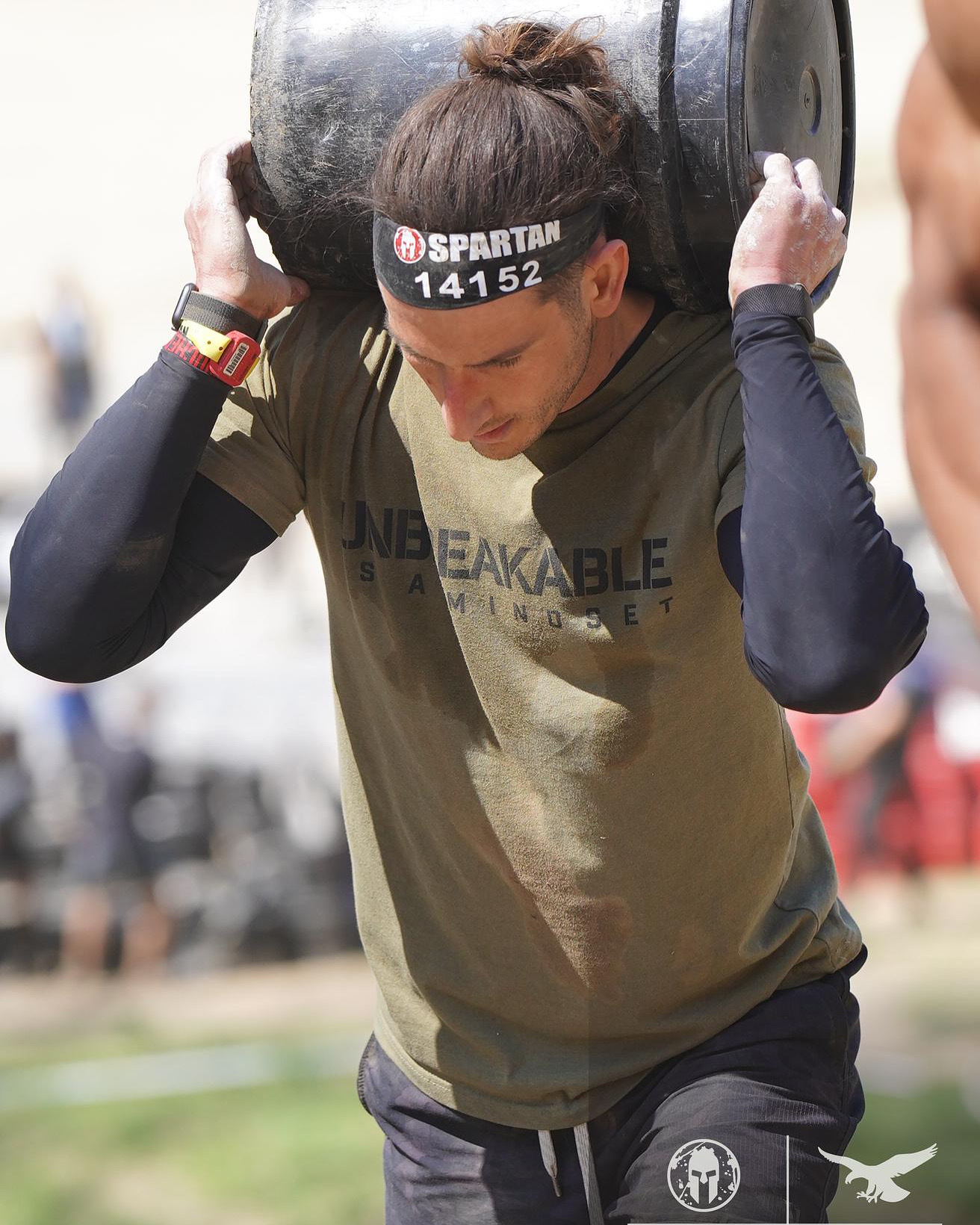
    There’s something special about the 21K, 30-obstacle Spartan Beast for a first-timer with a little bit more grit and fitness than a true first-timer. It’s long, but not too long. If you can run a 5K or 10K fairly efficiently, sure, you could do a Sprint or a Super like most would. But why not take the plunge into Spartan World by trying the Beast first? I tried it myself and survived, so here’s how you can, too. Also, if you want to race, don’t pay full price! Get 25% off by using the code HFP25 at checkout on spartan.com

    First, some background:

    The last time I did any sort of obstacle course was around 2013. I ran a short sample course at Reebok Headquarters in Canton, Mass. with Joe De Sena himself as a part of a campaign for the magazines that I was working for at the time. I followed Joe and carried logs, climbed walls, and failed the rings. He watched me do 30 burpees. Every single one of them. (Seriously, he counted.)

    The second time I dabbled in OCR was at the GoPro Mountain Games in Vail, Colo. in 2015, where I did what was similar to a Spartan Super — about 6 or 7 miles with obstacles. Surprisingly, I did fairly well, although my lungs weren’t used to the altitude. Fast forward almost a decade, and I got hooked on OCR. Coming off of a brutal shoulder surgery and frustrating chronic pain, I wanted to prove to myself that I’m still tough and gritty enough to crush my way through.

    I chose the Vernon, NJ Beast — the fifth-most difficult Spartan course in the country — on April 30, 2022 and ran in an Open heat with the goal of having fun on the obstacles (which I’m obsessed with) and just getting through. I finished in 4 hours and 21 minutes, but — in hindsight — I honestly think I could have broken 4 hours. It was tough, but it was fun as hell.

    So here’s the deal: If you’re pretty fit (both physically and mentally), go ahead and skip the Sprint and Super and take on the Beast!

    How 30 Days to Beast Works

    First, I needed to strengthen my weaknesses, which were primarily running endurance and adaptability to rough terrain and elevation.

    I wouldn’t consider myself an endurance athlete — never was one. I would consider myself a hybrid athlete, but with more of a background in traditional strength training and cross training. Regardless, I’m definitely not a runner, so I needed to build up to longer distances. Every Sunday was a long and slow run that progressed week over week, peaking at 14 miles. Every Wednesday was a shorter distance run that I did at a significantly faster pace. This provided a nice balance.

    I live at sea level, and while I have experience running on sand (which was helpful), my technical trail running is mediocre at best. Anywhere I run is typically dead flat, so going uphill is always hell. I knew that I needed to get at least one day in per week on a trail. In addition to my Wednesday shorter-distance runs, I threw in some hill sprints or short runs on the beach with a weight vest. On both running days, I would also perform burpees, muscle-ups, and/or toes to bar to simulate racing.

    The other days of the week were either lower-body strength in the gym to keep my legs strong, or upper-body pulling to keep my back, shoulders, and forearms primed for obstacles. A day of complete rest was baked in for recovery. Fortunately for me, I’ve got a good upper-body strength and some general athleticism, so carrying heavy things, playing on monkey bars, and swinging on rings sounds like a party to me.

    Is this program for highly-competitive Age Groupers? Probably not, but will it help a first-timer get through feeling healthy and strong? Absolutely.

    The 30 Days to Beast Program for First-Time Spartan Racers


    View this post on Instagram


    A post shared by Mike Simone (@mike_simone)

    Sunday: Long and Slow Run + Burpees

    Week 1: 8 miles + 120 burpees

    Week 2: 10 miles + 90 burpees

    Week 3: 12 miles + 90 burpees

    Week 4: 14 miles + 60 burpees

    Monday: Upper-Body Strength and Obstacle Prep

    Bird dog (5 sets x 10 reps)
    Pull-ups (5 sets to failure)
    Rows superset with floor presses (5 sets x 10 reps)
    Farmer carries (5 sets with 50 pounds for max distance)
    Crawling (5 sets x 2 minutes each)

    Tuesday: Easy Uphill Walking Slog with Weight Vest

    30-60 minutes at 2.8 mph with a 15% grade

    Wednesday: Shorter, Quicker Run + Sand

    3-5 miles + ½ mile beach run with weight vest (or simply add the vest and run on whatever terrain you have available)

    Thursday: Lower Body Strength + Additional Dead Hangs

    Traveling lunge (2 sets x 10 reps each direction — forward and reverse)
    Single-leg deadlift (3 sets x 10 reps)
    Front squat (5 sets x 10 reps)
    Split squat (3 sets x 10 reps)
    Chops (3 sets x 10 reps each side)
    Dead hangs (5 sets x as long as possible)

    Friday: HIIT Session

    4 rounds for time: 500-meter row, 800-meter run

    Saturday: OFF

    Rest and recovery

    Commit to Your First Race

    If you can easily run a 5K, commit to a Sprint.
    If a 10K is a breeze, commit to a Super.
    If a half-marathon is no problem, commit to a Beast.
    If you can run a marathon (and/or are downright crazy), commit to an Ultra.

  • The 5-day trail mix workout plan

    The 5-day trail mix workout plan

    Growing up, I was always on the trails or deep in the woods exploring. Fitness, exercise, and workout plans weren’t even a thought in my mind yet. It didn’t matter if it was a huge parcel of land or just a small plot in the neighborhood. The season and weather didn’t matter either—it was calming and exciting at the same time. But, there is something particularly special about those quiet, cold fall and winter days. I can smell the grass, leaves, and dirt just thinking about it.

    I never really put any thought into why I enjoyed it so much other than it’s what kids do: explore and let the imagination run wild. Decades later, the feeling of excitement and adventure immediately returns the minute I step away from everything and venture into the woods. I get creatively inspired and my imagination breaks free again. Nature is the supplement we all need to start taking a whole lot more of.

    How this workout plan works

    Big lifters: this adds adventure and an endurance component into your routine.
    Weekend wanderer: the supersets and circuits will level up those long walks.
    Endurance elites: the strength training components will make your body unstoppable.
    Newbies: you’ve got nothing to lose and everything to gain.

    For general strength, endurance, and fat loss, follow this plan in order on five consecutive days. Rest two days and repeat again for another 2-3 weeks. If you’re following another plan such as something like: Redemption, Reconstruction, Foundation, or Timeless, then you can add a couple of these workouts as your body physically allows.

    This is the trail mix workout plan. Pick your mix.

    #1 – The Salty & Sweaty Everything Mix 


    1. Incline Push-up
    2. Single-leg Decline Push-up
    3. Dip + Tuck
    4. Dip Bar Leg Raise
    5. Pull-up
    6. Neutral-grip Chin-up (or Chin-up)
    7. Controlled Hanging Leg Lift
    8. Decline Leg Lift + Pop

    Complete 3-5 sets of as many reps of each exercise as possible. Rest as needed, but as little as possible. Run/jog 2-3 miles before, after, or in between the exercises.

    #2 – The Sweaty & Salty Two-Move Mix 


    1A. Push-up
    1B. Pull-up

    2A. Spiderman Push-up
    2B. Off-set Pull-up

    3A. Mini-plyo Push up
    3B. Eccentric Chin-up

    Complete 3-5 rounds of each superset. Do as many reps of each exercise as possible. Rest as needed, but as little as possible. Run/jog 2-3 miles before or after the circuit.

    #3 – The Sweaty & Salty Metabolic Mix 


    1A. Jumping Jack
    1B. Mountain Climber

    2A. Jump Squat
    2B. Squat Thrust

    3A. High Knee
    3B. Single-arm, Single-leg Plank

    Perform each exercise for 30 seconds. Complete 3-5 rounds of each superset. Rest as needed, but as little as possible. Finish the workout with 5-10 “all-out” sprints. Rest 60 seconds between sprints.

    #4 – The Sweaty & Salty Upper Body Climber’s Mix


    1A. Single-arm Dead Hang
    1B. Plank Toe Touch

    2A. Knees-up Pull-up
    2B. Plank Knee Tuck

    3A. Static Pull-up
    3B. Push-up

    *4. Muscle-up

    Complete 3-5 supersets per A/B grouping. Rest as needed, but as little as possible. Perform as many reps as possible of all exercises.Run/jog 2-3 miles before, after, or in between the exercises. * Perform 3 sets of muscle ups, based on abilities.

    #5 – The Sweaty & Salty Lower Body Hiker’s Mix


    1.Broad Jump
    2. Squat Thrust
    3. Star Jump
    4. Bodyweight Squat

    Perform each exercise for 20-30 seconds each. Complete 3,5,7, or 10 rounds . Rest as needed, but as little as possible. Run/jog 2-3 miles before, after, or in between the exercises.

  • The Brick Workout: An Essential for Hardcore Triathletes

    You may be looking to complete your first triathlon or maybe you have already experienced the rush of a race or two and now you’re looking to improve. One of the most important workouts you should include in your plan is the brick workout.

    The Purpose

    The brick workout is essential in training because with a triathlon, you are not just completing one sport and finishing – you have to make the smoothest transition from one discipline to the next. The only leg that a triathlete participates in being truly fresh is the first one – the swim for a regular race, and the run for a reverse-style race. As fatigue sets in, form and perceived exertion can be different than the beginning of the race. There are two transitions in a triathlon race – from swim to bike, and from bike to run. The first thing that comes to mind when you hear the word “brick” is one that goes from the bike to the run, however getting a ride in after a swim workout should also be utilized for training.

    The Types

    The bike to run brick is an important element to training because an athlete is transitioning from a fixed-path, low impact exercise that utilizes and fatigues similar muscles into a weight-bearing, high impact, non-restricted path of running. These muscles though, are not used at exactly the same ratio. By training with the bike to run brick workouts, you allow your body to become accustomed to the feel of transitioning from the ride directly into a run. These bricks can be long or short duration with varying types of sets. When utilizing short bricks, it is necessary to focus on higher power output and faster speeds at both ends for more sets. For longer duration bricks, the focus of the training should be the pre-fatigue of the muscles from the first discipline before beginning the next one and will likely have a less amount of sets. With this being said, a ride should almost always be followed up by some sort of a run because a triathlete will always have to run after they bike, unless it’s reverse, they would have to swim.

    The swim to bike brick can be a little more challenging transitioning from the pool to a bike so the focus likely won’t have as many variables as that from the bike to the run. One great way to focus on a swim to bike workout is riding the bike to the pool followed by a moderate to high intensity ride home. Another option if you are using a pool in the gym is to utilize a spin bike if available, but if it’s not an option, doing some sort of activity – whether running or riding – immediately after a swim workout will benefit a triathlete from making the transition from a supported workout to one that is over-ground.

    If completing a triathlon or improving on your previous race is a goal that you have and are looking for a workout to help you, utilizing the brick workout will give you a great benefit and put you a step ahead of the rest.

  • The Top 10 Things to Remember for Your First Triathlon

    When you’re getting ready for your first race of any kind, it can be very nerve-racking. You hope you have been training enough to get you across the finish line and that you have all the right gear to make it the best experience that you can. Since a triathlon has three different disciplines, it can be confusing on what you should and shouldn’t bring. Let’s take a look at some of the top 10 things you should remember to have to help you complete your first triathlon.

    1. Race Numbers

    Your race number is one of the most important things to remember for your triathlon. It is how you get into transition before and after the race, it’s how you check in and check out your bike and gear. You will get a race number for your bike, your helmet, your race belt/running gear and also for your gear bag. This number will also be how you will be able to check your results and find your photos online. Don’t lose your numbers!

    2. Bike

    Some people think that they have to jump right onto a road or triathlon bike to compete for their first triathlon. This couldn’t be farther from the truth. The best bike for your first race is likely the bike you already have, or can borrow or rent. It isn’t worth it to spend a lot of money on a bike before your first race if you don’t even know whether you will like the sport or not. What happens if you only do one race and you spent $2,000 on your bike and equipment? Whether you have a hybrid, mountain bike, or are borrowing one, use what you’ve got! If you don’t have a bike, it’s safe to look for a good used one. If you are in the market for a new bike, determine what type of bike you would use if you ended up only doing one triathlon – if you like racing and get more involved, then take the step up to a road bike and eventually a triathlon bike.

    3. Helmet

    If you have signed up for your first race, hopefully you have read all the rules. A helmet is required for any entrant to a race and it’s for your safety. You will likely be riding with hundreds of people of all skill levels – anything can happen! Your helmet should be CPSC certified and be less than 3-5 years old. Don’t worry about getting one of those aero helmets until you decide how serious you want to get after your first race or couple races. A good helmet should cost you between $50 – $120, as the price increases, so does the protection and the benefits such as air flow, weight, aerodynamics, etc.

    4. Goggles

    If you don’t have goggles and even if you do, you want to make sure they fit properly. Swimming in open water and with a bunch of people is a lot different than training in the pool. You can test whether your goggles fit properly or not by putting them up to your eyes, gently pressing them on – without the strap around your head – and seeing if the goggles stay on and are comfortable. The next thing to look at is if you have tinted or clear goggles. This is important because if your start time is right as the sun comes up, having dark goggles is going to make it hard to see, but if you have clear goggles and are facing the sunrise in the water, you may get blinded. When you put your goggles on, you can wear the strap under or on top of your swim cap – some athletes will even wear two swim caps, with the race cap on top. When the strap is under the cap, if you get kicked in the water, your goggles are less likely to get knocked off.

    5. Flashlight

    Transition opens before the sun has even risen. Sometimes the race venue will have lights illuminating the transition area, but not very often. One thing that you shouldn’t forget is a flashlight so that you can see when you are setting up your transition area. Being able to see where everything is will help your setup go faster and you are less likely to lose something you may need during the race.

    6. Gels/Nutrition

    Nutrition and gels are important for longer races, but if this is going to be your first full race, regardless of the distance, there’s a good chance you may find your tank running on empty at some point. The important key for nutrition and gels during the race is to give you the quick energy you need to keep going. How much you need should be determined during your training up to the race itself. Gels can be taped to your bike or carried with you during your run, but figure this out before race day!

    7. Hydration

    Keeping hydrated during your race is one of the most important challenges. Even through you may be starting in the water when the sun rises, if you are racing during the summer, in the ocean, or in the south, you can become dehydrated before you realize it. The salty ocean water will cause an increased rate of dehydration if swallowed, and if you find yourself getting thirsty, you’re already behind on your fluids. Without enough fluid intake, your body can cramp, your energy levels can plummet and it can be the difference from crossing the finish line to never getting the chance to see it. Just as the gels and nutrition, you should try out different types of hydration to see what works for you. When you sweat, you lose more than just water, and you need to actively replace the electrolytes you are losing. There are many different types of hydration methods, so finding what works for you is very important to avoid unforeseen problems that can arise.

    8. Breakfast

    The morning of your first race can be filled with anxiety and nerves. It can be easy to forget to fuel your body for the exercise you’re about to do. Making sure you get some calories in before the race can help give you the energy to get off on the right foot. A small serving of food such as oatmeal or fruit can be good enough. If your body doesn’t react very well to food early in the morning, it’s important to be able to get enough calories within a comfortable time frame to give you the energy to begin the race and help you get through at least the first leg.

    9. Wetsuit

    Not all races are wetsuit-legal, but it’s always a good idea to make sure you bring a wetsuit just in case when the morning comes around and the race directors allow wetsuits. Your wetsuit should be one of the first things you pack, especially if you are swimming when and where the water temperatures can get very cold. Forgetting a wetsuit in a cold morning swim could prevent you from even being able to start your race – depending on the water temperature. You should know what temperature you can tolerate with and without a wetsuit, but it’s always a good idea to bring it just in case.

    10. Transition mat

    A transition mat may not be the first thing you think of when preparing for your race, but it can be a lifesaver. Your transition mat can help your transition area stand out from the hundreds of others in the race. It can also help you keep your gear organized and give you a place to keep your feet clean if the transition area gets sloppy. Pick a mat that is going to stand out to you. It shouldn’t be as large as a beach or shower towel, but should be large enough to fit your gear on without overtaking the person next to you.

    BONUS: Your Smile!

    The number one thing to bring to your first race is a smile. It’s important to have fun! There will be large crowds cheering you on throughout your entire race and a lot of photos being taken. Whether you signed up to check it off a bucket list, to do something with a friend, to mark a milestone in your life, or to try to win, it won’t be worth it if you’re not having fun!