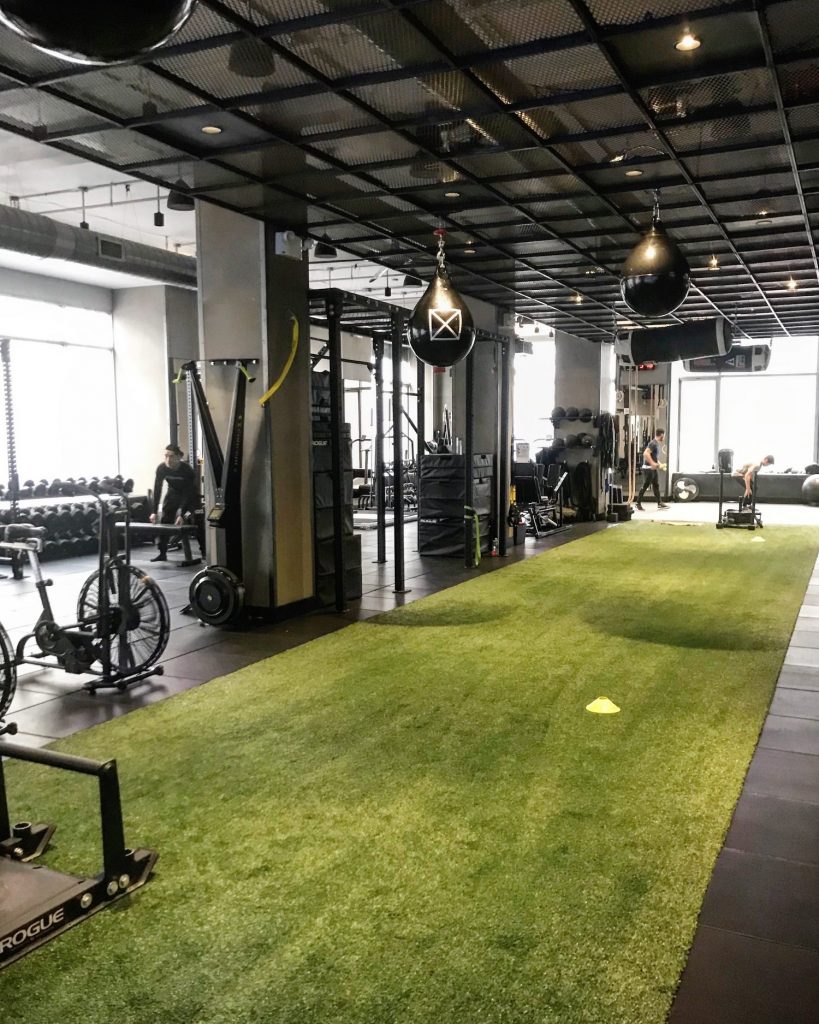
Soreness is a part of the game, but it shouldn’t be debilitating, and it doesn’t necessarily mean you had a good workout. You don’t necessarily “cure” sore muscles, but you can alleviate some of the achiness.
In no particular order:
1. Active recovery. (movements and activity that’s not overly exhausting) Think of this as simply getting the blood flowing. During exercise or when you’re active, blood carries nutrients to and from muscles to help you perform and recover. While there are instances when you need a complete rest day, most other times should be spent doing light activity. Examples might be a bike ride, walk, hike, or swim. For more on active recovery, see this story: What a rest day actually looks like
2. Stay well hydrated. Water, like blood, helps carry nutrients to working muscles. It’s also important for balancing electrolytes and supporting joint lubrication. The Food and Nutrition Board recommends 91 oz for women and 125 oz for men daily, but depending on the size of the person, how much they sweat, and how much they train probably will push that number higher.
3. Make sure you’re eating right. The right foods are critical for building muscle and recovering quickly. Protein is probably the most important in this instance. While carbs and fats are primarily energy sources, protein is primarily for rebuilding muscle. There’s a lot of back and forth within the health and fitness community on how much protein is needed, but we like going with a straight-forward, 1 gram per pound of bodyweight to keep things simple. We also believe that the 50/30/20 ratio (protein to carbs to fat ratio) is the best for body composition goals and maintaining energy levels. Note: this macronutrient protocol could swing significantly in favor of more carbohydrates for distance or endurance athletes.
5. Foam roll. A lot of folks like to foam roll before and after their workouts. That’s fine, as long as it’s light enough and short enough to “wake up” the muscles and not overly relax them. We prefer saving the foam rolling for night before bed and focus more on dynamic stretching before workouts and static stretching after workouts. Is that a hard rule? No, but make sure you’re doing all three.
6. Deep tissue massage. If you can afford it, yeah, this feels good. But then again, can you afford it? If you can’t pay someone to massage you, do myofascial release on yourself; i.e – foam rolling. A lacrosse ball is another good tool to use for getting in tighter spaces in the shoulders and hips.
7. Stretch. This is pretty much like active recovery or even like foam rolling to an extent. It’s moving the muscles and tendons, helping with blood flow, ultimately helping with recovery. As mentioned above, dynamic stretches before a workout, static stretches after one. Read: how to warm up
8. Infrared sauna. If you can afford it, or have the time it could help. Research is mixed, but a lot of experts swear by it. We’ve also found it helpful.
9. Acupuncture. If you can afford it, acupuncture is another with mixed research, but does have the potential to help. We’ve found it to be.
Sore muscles are normal. It’s going to go through its process. Remember, soreness isn’t necessarily a sign you’re going to build muscle or lose weight. Also remember, if you stop getting sore, that doesn’t mean you won’t see results either. Soreness usually kicks in 24-48 hours after a workout for a particular muscle group or groups. It will come on a little, then peak, then slowly dissipate. When you don’t feel soreness right away, for example, if you did an upper body workout on Monday, but don’t feel sore until Wednesday, that’s called Delayed Onset Muscle Soreness, or DOMS for short.
For a smart training and recovery plan that’s built just for you, check out DigitalFitnessAdvisor.com, our new exclusive programming service.
This is not a “eat meat” or “don’t eat meat” debate. If you don’t eat meat for environmental, ethical, or other personal reasons — go for it — more power to ya.
If you don’t eat meat because you feel that there are healthier meat-free alternatives, alright, won’t fight anyone on that either. Whether that is actually a fact, or just a popular trend, I don’t know.
More and more studies might come out saying meat-free is better for overall health, but could that be because meat-eaters are eating the wrong kind of meat, for example, fatty beef that’s loaded in saturated fat? Maybe. Again, I don’t know.
However, if you’re not eating meat because you’re under the impression that it’s specifically better for weight management, weight loss, or fat loss, then you’ve got it all wrong.
Case in point: The wildly-popular “Beyond Burger” by Beyond Meat produces products that look, cook, and taste like traditional beef. One 4 oz patty is 270 calories, has 20 grams of protein, 5 grams of carbs, and 20 grams of fat (5 grams of which are saturated). When compared to a traditional burger, let’s say 90% lean, a 4oz patty is about 200 calories, has 23 grams of protein, 0 carbs, and 12 grams of fat (4.5 grams of which are saturated). That’s beef #1. They are both loaded with fat.
If you slap a slice of American cheese on there that’s another 100 calories and another 9 grams of fat (5 of which is saturated). Did you know that based on a 2,000 calorie diet that 5 grams of saturated fat is about 25% of your daily value? One burger, whether it be a Beyond Burger or 90% beef, and a slice of cheese and you’ve already hit 10 grams of saturated fat — or 50% of your daily value in one meal.
Toss either one between a bun, and that’s a significant amount of carbs, but carbs are not the subject of discussion here — saturated fat is.
Beef or the Beyond Burger, regardless of what is more ethically-moral, environmentally-friendly, or healthy — they are both still cheat meals. Period.
Nutrition Facts for Beyond Burger
Nutrition Facts for 90% Beef Burger
Now, before I get into my second beef with Beyond Burger, it’s not all bad.
First, the taste of the Beyond Burger is OK. And it’s nice that the protein content is as high as a traditional beef burger. So making the switch over actually does make sense if you’re not a die-hard ground beef eater. They are pretty much equals. However, as mentioned above, they’re still cheat meals and that is just way too much saturated fat for my liking. Which brings me to beef #2. After visiting the website for the Beyond Burger and clicking on as many links as possible, I couldn’t—for the life of me—find the nutrition facts of it, other than that is has 20 grams of protein. Fantastic, 20 grams of protein, but I should be aware that its fat content is also comparable to that of a traditional ground burger. So should everyone else that is thinking they are probably eating a burger that could help them manage their weight.
When I would eat a Beyond Burger or traditional burger: on a super-active day. Other than that, it’s reserved for special occasions and cheat days.
Still trying to figure out what to eat and when? Check out our new custom programming service at digitalfitnessadvisor.com
The Subject: Ben O’Toole (@mrbenotoole) is 6’0 and 180 pounds from Brisbane, Australia. Ben has had roles in films such as Hacksaw Ridge (2016), Detroit (2017), and 12 Strong (2018)
Abstract: Ben had a film project which was to begin shooting in April, 2019. For the particular character he would be playing he needed to completely transform his physique by building and maintaining significantly more muscle mass while shedding large amounts of body fat. He had approximately 3 months to do it.
The Methods:
A workout plan broken down into a series of training phases ranging from 2 – 6 weeks. Each phase was strategically designed with a specific purposes such as muscular size, muscular strength, and metabolic conditioning.
A carefully crafted eating protocol that would provide the right amount of nutrition to energize workouts, facilitate muscular growth and recovery while also accelerating fat loss. The primary focus of the eating plan was on the macronutrient breakdown (protein, carbs, and fats) and meal timing. Similar to the workout plan phases, the eating protocol would be adjusted based the goals of training phases, the results he was experiencing, and how he was physically and mentally.
Weekly check in calls or video chats were used to analyze progress and discuss any questions or concerns.
Weekly photos were taken to document visual body composition changes. Weight scales and body fat measurement tools were considered unnecessary.
The Process:
The first discussion with Ben was to learn about his experience and familiarity with exercise and nutrition. We also discussed what his expectations were going to be over the course of 3 months.
Ben was then sent a questionnaire to get a much deeper understanding of his level of knowledge, both on a training and a nutrition front. Additionally, the questionnaire obtained information about his lifestyle habits and motivations, plus how much time he’d be able to allocate and what type of facility he’d be working out in.
After the questionnaire was returned, a follow up call was held to discuss his answers and begin mapping out a preliminary action plan for his training and nutrition.
During the follow up call, it was mutually agreed upon that given his current body composition, his exercise familiarity, and his ability to train and eat with no restriction, his goal of seeing incremental body composition improvements was very possible.
Do you want to start a transformation process of your own, check out HFP’s new exclusive service, DigitalFitnessAdvisor.com
The Workout Programming:
Starting out with straight sets and the rest-pause method
Considering Ben’s timeline of 3 months, the approach was to break his training into 3 training phases with an additional phase after the transformation to maintain. The first phase was focused on building strength and size. We used straight sets, meaning he would perform an exercise for a prescribed number of reps, rest, then repeat for the total number of prescribed sets. We integrated some specialized techniques such as rest pauses in the later weeks. Rest pauses are an intense method to force him beyond fatigue or failure, resulting in boosts of strength. This first phase lasted 6 weeks.
Thinking eccentrically
After 6 weeks, we moved into a new phase of training. While the focus remained on strength and size, we took a slightly different approach so his results wouldn’t stagnate by adapting to the work. During this phase, for some of the exercises we focused heavily on the eccentric portion of the lift. When focusing on the eccentric, Ben would very slowly fight the resistance while lowering the weight or his body back to the start position. For example, during a bench press, he’d explosively press the barbell, then slowly bring it back down to his chest. This subtle change in the tempo is enough to provide variety to what he was doing in his first phase. For eccentric-focused exercises, Ben used lighter weights than in his first phase because of the increased amount of time his muscles would be under tension. Ben followed this second phase of training for 2 weeks.
Supercharging progress
After 2 weeks of phase two, we moved onto phase three. In this third phase, our focus was to really crank up the intensity by integrating supersets (completing one exercise right after the other). The purpose of the supersets was to provide another form of variety that his body and muscles weren’t used to. This works two ways: it excites muscles to grow, but the real play here was to start improve his metabolic conditioning—in other words, get him incredibly lean. As he moves faster from one exercise to the other his heart rate elevates, burning more calories, burning more fat. At this point in his programming, the start of shooting for his film was getting closer and closer. To get him as optimally camera-ready, this phase really accelerated his fat loss while keeping his muscles rock solid. Phase three lasted 4 weeks. His primary transformation is complete.
Running on the rest days
Supplemental cardio note: While various forms of cardio training was built into all phases of his program, Ben did include some low intensity short runs on occasion, more specifically on “rest” or “active recovery days”. However, we watched his recovery to ensure he did not experience any muscle wasting (catabolism) or experience any signs of overtraining.
Quick and dirty circuits
After 4 weeks of phase three, an additional fourth phase was put in place to continue the transformations progress, but more importantly, work around a new roadblock—his tightening schedule. At this point Ben has started shooting for the film. While he still has access to a facility to train in, his time is much more limited. In this phase he’s following a series of circuit workouts that require him to work hard and move quickly in a very short period of time. It’s designed to keep fat off (maybe even help loss a little more) while maintaining muscle. Typically these circuits are to be completed with all-out in intensity, however, given that Ben now needs to really concentrate on his work, he’ll train at a submaximal level. Instead of going all-out, he pulls back just enough to stimulate the muscles and get his heart going, but not too much to overly exhaust himself for the work. This phase is on-going and will last for approximately 2 – 4 weeks.
Once filming has concluded and his extremely low body fat levels are no longer necessary as a part of his character, Ben’s training while shift into a “Recession” or taper to give his body and mind a much needed break. He won’t stop working out, but volume, load, and intensity will be dramatically reduced. Here’s an example of a Recession workout plan.
Special Training Notes:
Ben was a bit exhausted from a couple leg workouts in week 5, we had him pull back resistance around 20% or drop his intensity level from a 10 down to a 6 or so for some additional recovery. In week 6, he went back to his original amount of resistance and level of intensity.
The Nutrition Programming:
Ben’s eating plan was designed to be smart and strategic, but as simple and as easy to follow as possible. First was to use very basic foods in their most basic forms that covered all of his needs: proteins, carbs, and fats. His protein sources primarily came from chicken, eggs, and protein powder. His carbohydrate sources were low glycemic index, high-fiber foods such as oatmeal (with exception of maltodextrin for post-workout recovery). He also used a variety of different steamed vegetables and salads to increase his fiber intake. His sources of fat came primarily from very minimal extra virgin olive oil and mixed nuts.
Next, we calculated his total calorie needs based on his age, height, bodyweight, and activity levels. From there we had him following approximately a 50/30/20 protein:carb:fat macronutrient ratio to allow him to build muscle and lose fat at the same time. He ate between 4 and 6 times per day. We strategically timed his meals to some extent. For example, a large chunk of his carbohydrate consumption would be after a workout along with protein. After consuming his post-workout meal, he would limit his carbohydrate intake until it was time to ramp up for a workout again.
Maltodextrin, which is a carbohydrate that is somewhat quickly absorbed (to help rebuild/recover muscles) was used, but only after a workout. It’s a sticky powder substance that can be added to protein shakes. The purpose of this strategy was to get his body and muscles the right nutrients it needs at that time which were protein and carbs. During post-workout meals, fibers and fats were avoided as they tend to slow digestion and not be as optimal as the protein and carb combination.
As Ben progressed along from phase to phase of the program, he slowly pulled back a little more carbs with each week, more specifically, around week 8. While the workout phases got a bit more intense, this really accelerated the fat loss. However, the main reason why Ben continued to build muscle and kept up his endurance and stamina was because he did not completely eliminate carbs or modify his post-workout nutrition. His carbohydrate consumption always remained the same after workouts.
An example of what Ben’s diet structure can be found here.
Special Nutrition Notes:
– Whenever Ben would get cravings to eat he’d have a little extra chicken or a small serving of sausage—keeping it to protein and fats.
– For the very occasional alcoholic drink, he went with carb-free vodka and lime soda.
– Early in process of configuring Ben’s diet, the discussion of “keto” came up which was completely avoided. While weight loss and fat loss would have occurred on such a diet, his carbohydrate consumption was critical for building muscle, aiding recovery, and maintaining energy levels — especially given his training intensity.
Results:
As you can see, Ben got completely shredded. And from what you can’t see, he got stronger too. While the amount of resistance he used for all of his lifts increased across the board, most notably, his front squat went from 40kg (88 pounds) to 60kg (132 pounds) and his dumbbell bench press from 32.5kg (72 pounds) per side to 37.5kg (83 pounds) per side.
And he got more efficient as well. One of the circuit workouts took him 31 minutes to complete at week 1, but by week 6, he completed it in 24 minutes.
Ben also reportedly had greatly improved his range of motion on all exercises.
He only lost a total of 5 pounds, going from 180 to 175, however, the body composition changes are night and day. No measurements or testing was done for his body fat percentage as visuals speak for themselves.
Conclusion:
Ben was very successful with his body composition transformation because he was completely committed to his programming, both the training and his food. He was consistent and focused on working harder and harder each week. He was in a positive state of mind and trusted the process. Due to the intensity and volume of his training, Ben will follow a “Recession” training plan to give his body some extra recovery while still keeping his muscles stimulated. With this block of time as history for Ben, he now has the know-how and experience to tweak and modify his training and diet based on what he wants to do with his body.
To get working on your own transformation, go to digitalfitnessadvisor.com and start the process. Serious inquiries only.
If anyone has a legitimate excuse for skipping a workout or healthy meal, it’s Russell Dickerson.
He just wrapped up co-headlining The Way Back Tour with Carly Pearce. And after April’s ACM awards—Dickerson is nominated for Song of the Year—he’ll be back on the road in May with Thomas Rhett for the Very Hot Summer Tour. (And don’t forget to listen to Dickerson’s new single “Every Little Thing“.)
Even though he’s constantly on-the-go and under pressure to nail his performances, he still prioritizes (and optimizes) his fitness.
We spoke with Dickerson about his college days in the weight room, what he’s learned about his body since then, and how exercise fuels and inspires his work. Plus, his take on the Keto craze, and how he works off the occasional detour to McDonalds.
HumanFitProject: Fitness means very different things to different people. Different motivations, inspiration. What does it mean to you?
Russell Dickerson: Oh, man, I really fell in love with fitness after I took a weight training class in college, actually. Really understanding my body and understanding the weight room and how good it feels after a good, solid workout, and I kind of got hooked after that. For me, it’s just a part of life, honestly. It’s a part of what I do, and it’s a part of stress relief. It’s so many things to me.
HFP: Does a workout ever help you with your creative process?
RD: Yeah, especially on runs, that’s kind of my creative space of just dreaming and coming up with ideas. You can just let your mind go as you’re on those trails.
HFP: How would you describe your style when it comes to working out?
RD: My style is all over the place because I never know where I’m gonna be at any given time. If it’s a hotel gym or we have adjustable free weights out on the road or are we gonna find the nearest Planet Fitness or whatever? There’s always a Planet Fitness somewhere.
HFP: Yes, true, there is a Planet Fitness everywhere…
RD: We hop all over the place. So my style would be like just roll with it, whatever you can do, whatever you can do for at least a quick half hour intense little cardio, or whatever it looks like.
HFP: You mentioned running as a time to let your mind go wherever it wants, but is there anything in particular that you tend to think about when you work out? Is there a mental routine that you get into?
RD: Yeah, it first starts with prayer and meditation. I know it sounds contradictory while you’re running, but prayer is a lot of who I am and what I do. So getting out on these trails, getting out into nature, is such an experience for me, and to just get my mind off all the stressful things and focus on what’s the next steps of like, you know, business ideas. That leads to business ideas and song ideas and show ideas and all that kind of thing. It’s really a creative process for me.
HFP: So this could be a fun one, given your career, but is there anything you listen to when you work out?
RD: Honestly, most of the time I don’t listen to music because it’s kind of a break for me, you know?
HFP: Alright, interesting… Very different than most folks, huh?
RD: Yeah, sometimes, on the road, if there’s a bunch of people working out together, then we’ll have some music, like Get Turnt on Spotify, that’s a classic workout playlist. Or sometimes I might listen to some worship music or something.
HFP: Yeah, got it. But if you had it your way, it would be a break…?
RD: Yeah man, especially being on a bus. There’s always the noise of a generator or an engine or music or loud this, loud that. It’s just like, we need time. My wife and I actually are headed right now, we’re going on a little hike, so it’s just like, shut the noise off, get the screens out of your face, and just enjoy life and nature.
HFP: Digital detox.
RD: Yep. That’s a nice phrase. Love it.
HFP: What’s your take on how to eat right? Any beliefs? Disbeliefs?
RD: Balance. I think every human being needs balance. You try these super-strict plans, but I’m more of a low-carb guy myself. I enjoy that lifestyle. I feel better being very low-carb. I tried the keto thing and it’s cool, it’s … I don’t know, I feel like keto isn’t for active people, though. You know what I mean? Like, you have to have carbs and protein.
HFP: True. A lot of our readers have given us that feedback as well. Research looks great for body comp, but not so great for performance.
RD: That was just my assumption, but I’m glad we agree on that.
HFP: 100%. So, you’ve been working out since college. What would you say you’ve learned about your body over the years?
RD: I’ve learned to just listen to my body more, but to have grace for myself. Like looking in the mirror like ‘Yo, last night we had a bunch of McDonald’s, so there you go. A little swole this morning’. Or, not getting to work out today, whatever it is. It’s really about being balanced, like don’t beat yourself up over small stuff. You can always get back on track.
HFP: Yeah. It’s gotta be tough with the amount of travel you’re doing.
RD: It’s tough, man, because you can’t pack a meal plan. We’re out on the road during the week, flying everywhere, and then we get in the bus for three days and it’s so inconsistent and it is really hard, but then, you just find ways around it. You just find your little thing. Like the Starbucks sous vide bites. I do those all the time. Low carb, high protein, it’s not the greatest thing in the world, but it’s better than just going and getting a cheeseburger, I guess.
HFP: Speaking of all the traveling you do, are there any rules that you follow when it comes to how exercise fits in to the plan?
RD: I did for a while but like I said, it’s all about listening to my body. My energy level might be like ‘Boom! Soon as we land, we’re getting to the hotel, we’re working out.’ But my mind is like, ‘Hey, actually, you’ve gotta play a show tonight and you slept four hours in the last three nights. You should probably take a nap.’
HFP: Right.
RD: I know all these movie stars and fitness people that wake up at 3 a.m. and hit the gym, like Dwayne Johnson. I follow them, but I gotta listen to my body, and I gotta sing, I have to perform.
HFP: It’s a different type of intuition.
RD: Yeah, totally. And the voice, man, the human voice is so fragile, especially when it comes to fatigue, and that being my livelihood. That has to be my first priority over getting a solid workout in. I love working out, but my wife usually is the one who calls me out. She’s like, “Uh, no, you need to rest.”
HFP: I don’t know how you keep the energy level up doing what you do. It’s incredible.
RD: Thank you.
HFP: So, what’s next?
RD: In May we’re hopping on the road with Thomas Rhett all summer. It’s called The Very Hot Summer Tour, and it’s gonna be crazy. We’re playing Madison Square Garden, all these crazy iconic venues.
HFP: That’s great!
RD: Yeah, man. Just found out that my first single, “Yours”, was nominated for ACM Song of the Year, so that’s been on our minds the last week. It’s just been like, holy cow. It’s been huge!
This interview has been lightly edited for clarity and concision.
A really good pump in the gym is what hooks everyone. Your muscles are absolutely bombarded with blood. Everything is an inch bigger than it was when you first walked in. Stress and anxiety are relieved. Negative thoughts or emotions turn positive. Sometimes these pumps can be so intense you feel as though you can work for another two hours straight. This is the lifter’s high.
Doesn’t matter if you’re already in great shape or you’re completely new to the gym—these will help you walk out of your session feeling solid.
Many of these techniques are built around the basics such as supersets, dropsets, rest pauses, statics, eccentrics, partials, and more.
You can add some of these to your existing plans, or use them for future ones.
For a longer-term plan, specifically when you’re trying to get bigger, stronger, and leaner, check out The Size, Strength, and Shred Cycle. This downloadable PDF is a combination of 3 effective HFP programs pulled into 1 for a total of 16 weeks of training. If you’re still very new and need to start a little slower, check out The 12-Week Accelerated Starter’s Plan.
#1. Rep tempo throttling
This is a modified dropset. The difference here is that the beginning is a slow tempo, after the drop you throttle up the speed. Start the set with a slow tempo, after reaching failure, drop the weight significantly enough to reach the same number of reps but at a faster tempo.
#2. Rep gapping
Your first set is super heavy and super low reps. Let’s say 5-6. Your next set is super light and super high reps. Let’s say 15-20. Continuously juggle back and forth. You will need to adjust the weight. Most people perform their heavier sets in the beginning while they have the most amount of strength, then move onto higher reps and lower weight in the later sets. This throws a wrench in that, but the experimentation it worth it.
#3. Stretched rests
In between each set, instead of taking a regular rest, you’re going to stretch the muscle you’re working on for 30 seconds. This works particularly well with the chest, quads, and hamstrings. You’re going to notice that you won’t nearly have as much strength as usual, but the blood flow and pump will be intense. Don’t be surprised if you need to dramatically reduce the resistance with each set. That should be expected.
Try this with a barbell curl and a barbell lying extension. Find a weight you can do about 15 reps of each exercise. Perform a set of 10 curls, then immediately perform a set of 10 extensions, then immediately perform a sets of 9 curls, then back to 9 extensions. Repeat this process all the way down to 1, then work your way back up to 10 again. Try it with any opposing muscle group/exercises. (Beware: compound exercises can be very tiresome.)
This particular trick works well for the lateral raise. Grab a heavy pair of dumbbells and perform as many partial reps of side raises as possible. You only need to move the dumbbell a couple inches—just enough to fire the deltoids without overextending them. After you fail on the heavy partials, head over to a cable station or grab a pair of very light dumbbells and perform a set of full range lateral raises to failure.
Instead of doing a few sets of flat bench presses, then moving onto the incline or decline, alternate them. Your first set could be flat, rest, then your next set could be a peg up, rest, then the following set could be another peg up. Do 3-5 sets of each angle with 30-60 sets rest in between.
Consider this as throwing the everything but the kitchen sink at your muscles. Start with your first set of an exercise as a heavy, slow rep for 6. When you reach failure, perform a 5 second rest pause and attempt another 1-2 reps. When you reach failure again, perform of a dropset (20%) to failure. Then, again, perform another dropset. At the point of your last rep, perform a static hold for as long as you can.
Pick an exercise, sets, and reps. Instead of performing a prescribed number of reps then resting before the next set, immediately drop the weight and perform nearly the same number of repetitions. To make this even more difficult, drop it again for a 2nd or 3rd time. The example above is a triple drop of dumbbell shoulder presses: 50s are done for 4-5 reps, 40s for 5-7, and 25s for 6+. Complete 5 rounds.
It seems like everyone is talking about a recession these days. Some say yes. Others say no. Whatever happens, happens. After nearly 10 years of economic growth, it seems about time though. Either way, a recession is inevitable, it’s a part of a natural cycle. Your training needs a recession cycle too.
For high performers, you probably have the tendency to push harder and harder each and every week. You start cheating on your reps, throwing around more weight than you should, pushing through HIIT sessions well past your pain threshold. While that might work for a while, with time, things come crashing down. First, you’ll hit a peak, then a plateau, then your performance numbers will start to slide. Worst case scenario: you’ll go out of business all together.
They key to sustainable long term growth is following peak weeks and pull back weeks. (Our 12-week Accelerated Starter’s Plan integrates the Recession concept after week 8.)
What is the Recession workout plan
The programming is broken into a 4-6 week block and a 2 week block. These will be categorized as pre-recession or peak weeks and recession or pull-back weeks.
The pre-recession or peak weeks (4-6 weeks) are hard, all-out intensity. You’ll be training at max capacity. This is where you’ll make a gains and muscle profits.
The recession or pull-back weeks (2 weeks) are not easy, but they’re not hard either. If we were to put a percentage on it, let’s say about 60-75% capacity. This is where you’ll keep your muscles stimulated to make modest gains, but you’re primarily focusing on recovery.
Following the Recession workout plan is a great idea after finishing up something intense like The Size, Strength, and Shred Cycle, our 16-week training guide. Or, if you’re a beginner that’s just getting started, check out how a Recession is worked into our 12-week Accelerated Starter’s Plan.
What you’ll do on the Recession workout plan
In weeks 1-6
You’ll work out five days a week. Three are focused on strength. Two are focused on cardio and conditioning. The days you’re not working out are for mobility and active recovery. Mobility could be light yoga or dynamic stretching. Active recovery could be any activity that’s not overwhelming for your body and muscles.
Five to 10 minutes per day, either before bed, before a workout, or after a workout are dedicated to relaxation techniques. Phone-free is our preferred method for workouts and relaxation times. If you need to stay connected, we suggest you check out Endel, an app that provides “personalized sounds to help you focus and relax”.
In weeks 7-8
Everything remains relatively the same as in week’s 1-6 with the exception of how much total work you’re doing, how much resistance you’re working against, and a few exercise swaps.
How the Recession workout plan works
In weeks 1-6
Three days in the gym lifting weights isn’t a ton, but it’s not a little either. If time tends to be an issue you for you, it’s plenty of time to get results. With big lift exercises like squats, deadlifts, and presses being the cornerstones, you’ll be operating in full-blown efficiency mode. Moving around heavy weight will overpower any stress or anxiety you’re harboring.
Each week, try to get 1 more repetition than last time, or bump up the weight. And there’s no need to be greedy, even small or modest improvements are still improvements.
One of the cardio workouts includes a high-intensity circuit, the other is a lower-intensity, steady-state routine. The HIIT stuff will put your heart and lungs to work, leaving you with a natural high afterwards. The longer runs, rides, or rows will improve your endurance and will to keep going.
Each week, for your circuit, try and improve your time to completion. For your steady-state, try and add some additional time or distance.
All of the workouts should leave you feeling in better spirits afterwards. These are tough workouts for tough times. Train like a bull.
In weeks 7-8
You’ll maintain the three days in the gym with weights and two days of cardio-focused exercise. Here’s where the “recession” and the pull backs come in. The big lifts you’re doing are going to be replaced with slight variations. For example: the traditional deadlift will shift to a trap bar deadlift, the dumbbell bench press will become a neutral-grip bench press, and the overhead press will also become a neutral-grip overhead press. This gives the specific muscles you’ve been hammering for six weeks a small reprieve while activating some others. The exercises in particular are also slightly more joint-friendly.
As mentioned above, you’re going about 60-75% capacity for these two weeks. We’re not going to get hung up on exact numbers here, but let’s say if the exercise calls for 10 reps, use a weight you could get around 12 or so, but stop at 10. Use this time to concentrate very hard on moving each rep with control and efficiency.
There’s no need to try and progress in reps or weight in the second week, this is only a short-term recession.
As for the cardio days, just take your time getting through the them. In the back of your mind just think: I’m only going 60-75% here.
Bear down and take your time through these workouts. Nothing exhausting here. Enjoy this time—you’ll have another six weeks to go hard again when you cycle back around.
The Recession workout plan schedule
Monday – Full body
Tuesday – Go hard with HIIT + mobility
Wednesday – Full body
Thursday – Go the distance for endurance + mobility
Friday – Full body
Saturday – Rest up and relax, but do something active
Sunday – Rest up and relax, but do something active
The Recession workouts: weeks 1-6 (peak weeks)
MONDAY
Bird dog row 3 x 10
Traditional deadlift 5 x 10
Dumbbell bench press 4 x 10
Split squat superset with bodyweight squat 4 x 10, 4 x failure
Push-up 3 x failure
Pull-up 3 x failure
Rest 30-60s between sets
TUESDAY
Run a 5K as quickly as possible, followed by 10-15 additional minutes at a casual pace.
WEDNESDAY
Plank+dumbbell row 3 x 10
Dumbbell overhead press 5 x 10
Barbell bent-over row 4 x 10
Heavy reverse lunge superset with bodyweight jump squat 4 x 8, 4 x failure
Barbell curl 3 x 12
Dips 3 x failure
Rest 30-60s between sets
THURSDAY
Sprint intervals x30s with 20s walks
Repeat 10x
FRIDAY
Stability ball push-up 3 x 10
Barbell front or back squat 5 x 10
Single-arm dumbbell row 4 x 10
Weighted cable crunch 3 x failure
Dumbbell front raise superset with dumbbell side raise 4 x 10, 4 x 12
Push-up 3 x failure
Rest 30-60s between sets
SATURDAY
Active recovery day
SUNDAY
Active recovery day
The Recession workouts: weeks 7 -8 (pull back/recession weeks)
MONDAY
Bird dog row 3 x 10
Trap bar deadlift 4 x 10
Neutral-grip dumbbell bench press 3 x 10
Split squat superset with bodyweight squat 3 x 10, 3 x failure
Push-up 3 x 1 rep before failure
Pull-up 3 x 1 rep failure
Rest 60s+ between sets
TUESDAY
Run a 45-60 minutes at a casual pace.
WEDNESDAY
Plank+dumbbell row 3 x 10
Neutral-grip dumbbell overhead press 4 x 10
Barbell bent-over row 4 x 10
Reverse lunge superset with bodyweight jump squat 3 x 10, 3 x 1 rep before failure
Hammer curl 3 x 12
Dips 3 x 1 rep before failure
Rest 60s+ between sets
THURSDAY
Sprint intervals x20s with 30s walks
Repeat 10x
FRIDAY
Stability ball push-up 3 x 10
Dumbbell squat 4 x 10
Seated cable row or T-bar row 3 x 10
Weighted cable crunch 3 x 1 rep before failure
Dumbbell front raise superset with dumbbell side raise 3 x 10, 3 x 12
Push-up 3 x failure
No one really talks about low intensity workouts. Why? Probably because they don’t sound very exciting. Heck, they don’t even sound like they’d be effective. But low intensity workouts serve a very important purpose in the bigger picture. Low intensity workouts compliment tough workout programs like The Size, Strength, and Shred Cycle.
Would you like customized programming for your individual needs, check out our exclusive new service at DigitalFitnessAdvisor.com
Low intensity workouts can be categorized a few different ways:
De-loads or Tapers
De-loads or tapers are where you follow your normal workout plan, but reduce the number of exercises or sets you do, or reduce the amount of resistance you’d use. If your workout is cardio-focused, it could mean going for less distance or at a slower pace. De-loads or tapers can be a week, or last several weeks, depending on how you’re feeling or performing.
Active recovery
Active recovery means you take a rest from your normal training, but still remain active in other ways. For example, if you lift hard and heavy your “rest days” could actually be hikes, bike rides, or other sports. The purpose of active recovery days are to keep your blow flowing. Surprisingly, you could recover more quickly doing this than just laying on the couch.
Mobility
You could consider mobility a “greasing of the gears.” It’s impossible not to have felt stiff at some point. Can’t get your hands high up over your head? Can’t squat as deep? You’re tight. Mobility workouts aren’t for building muscles or breaking PRs. They could certainly help, but they’re primary purpose is to keep you loose and improve the range of motion of your joints.
How to use low intensity workouts
For strength training, de-loads or tapers can be done anytime, more specifically, if your numbers stagnate or you don’t feel on the top of your gain. For runners, check out the 13.1 runner’s plan to see where our expert placed in a taper.
Activity recovery can be done in between strength or endurance workouts days instead of a full-fledged “rest” day.
Mobility workouts can be done essentially anytime. They can be done on active recovery days, or done at the beginning of a workout as a warm-up, or at the end as a cool-down.
The signs on the corner of 14th street caught my eye. It was very powerful messaging. The videos of the athletes were just as powerful. “Owning everything” is Performix House‘s thing. To be honest, wasn’t sure how I felt about it. Too much?
Ironically, a few weeks later I received a kind invitation to get the full experience: check out the space and have a trainer—@DevonLevesque—hand-picked for me. I did my homework and scrolled through his feed, noticing he is an animal of an athlete. I made sure to let everyone know I wasn’t looking to die.
If I already lost you at $900 per month or the imagined thought of a premature death, then relax, there are also lower tier memberships starting at $249. The $900 price point is for pretty much all-access. They also say the trainers are vetted and they are all super-fit. I knew I’d be put through the wringer to some extent, but it was just right.
The space has everything you need for anything you could possibly want to do. I enjoyed the fact that I could use a sled. Although, I will later regret this brief moment of delight after thinking about the crawling plate pushes after doing a set of deadlifts. I knew in that moment I was de-conditioned. And, I never got to use the sled.
To start, I got about 10 minutes with the TheraGun as a warm-up. That thing is about a $600 piece. It’s been around for some time now, but it’s basically this “gun” that fires pulses into your muscles very quickly to “wake them up”. Without getting all scientific, it does seem to feel good before getting started.
I then did walking marches, hip swings, both forward and back, then hip swings with my hand against the wall, and short series of wrist mobility exercises. I picked up a few new moves, or variations of my own. There’s even some we have here on HFP. After that it was to banded thrusters for 30 reps. He picked my pace up on that one… (For the record: I was trying to pace myself to survive what might come!)
I then got on the treadmill for 1/2 mile. I had expected that this 1/2 mile would be like every other 1/2 mile, boring as hell. I go through running phases, but for the most part, I dislike running, I’m sorry. And, how about this? He knew what my time would be. I believe it was 3:15. That’s strong, I know, but I’m 96.8% sure that’s what it was.
This 1/2 mile was a friggin son of a… No holding back on that description. We hit a gnarly, absolutely-gnarly sprint for a tenth somewhere in the middle (meaning he made me sprint like all hell), then finished with another sprint at the end. I wasn’t going to, and I think he knew that, but he did tell me not to jump off. It was well-timed.
After that shit…
It was over to the deadlift. I was excited about this. But supersetting them with crawling plate pushes was just not pleasant. (I actually mumbled to Devon that he was killing me!) In my second set, I missed getting the plate down and back in under a minute. The legs just weren’t having it. I will say though, I think I could have done it if my head was in the game. But I’ll also happily admit, that was a moment I realized it’s a weak spot.
After my seriously extended rest period, my heart was still pounding. We made small talk about where we are from and what we do or had done back in the day. We both have some roots in NJ.
Onwards to heavy kettlebell farmer’s walks with towels around the ends. Down and back four times. He pushed against me at times, which obviously made me more tired, but it forced me to go harder. First set was fine, the second set started to suck, but at the perfect time. As he helped me up, that’s when I told him “good programming.” The farmer’s walks were superset with a med ball press. I laid flat on my back with the ball on my chest. I pressed up and he fought against me for about 12 or 15 reps. Then, I had to throw it up to him to failure. It was a nice challenge for my upper body and flowed nice with carries.
I also noticed, again, how I’m not used to being the one getting his ass kicked.
This is still not over…
It was onto the Kaiser machine for a combo of a flye with a press for 12 reps or so. That would be superset with these close-grip push-ups using a foam roller for 15-20 reps or so. During set two I lost count again? (I do that a lot.) “Was that 10?” I asked. “That was 7,” Devon responded. Fine, I took a little breather and got to the prescribed 15.
Next up was an ez curl bar against the wall. I did curls and he resisted me, he also resisted me on the pushdown. After three sets of this my arms were extra fatigued, but we joked about “the gains”. No idea how many reps I did. It just hurt.
The “finisher” was some extra ab work. I laid on my back with my legs straight with a 20 pound dumbbell over my head, I proceeded to attempt sit-ups. Usually I do these with my knees bent; these were way harder.
All done. It was a stretch and a few more minutes with the “gun”. I passed on infrared sauna and cryotherapy.
I enjoyed this workout. It was new for me to some extent so it was very challenging.
As I was preparing to leave, Devon hooked it up with some meals from Don’t Be a Pig, a subscription meal prep company that currently serves New York and New Jersey.
The Bottom Line:
Performix House is a nice space with anything anyone could need. They want people that love this stuff, or want to love this stuff. From my experience, you’ll get a good workout with good programming with just enough push. If you can afford it, they’ll get you super-fit, no doubt. If you can’t afford it, there are the lower tier memberships or classes available. For our non-New Yorkers and international readers, who knows if one will pop up by you. Hopefully you at least enjoyed my struggle through the workout and can try it for yourself somewhere.
I’ve got a lot of my own workouts, but this is now my Performix House workout courtesy of Performix House and Devon Levesque.
THE WORKOUT
Warm-up
Walking marches, walking hip swings (forward and back), hip swings against the wall, wrist mobility exercises.
1/2 mile run with 2 sprints, finished at 3:15.
Band thrusters x30 (easy pace)
The Actual Workout
Deadlift superset crawling plate push, 3 sets, 135 for 15 on the deadlift, then 185, then 225. The plate was 45 pounds.
Heavy farmer carries superset with med ball press +toss, 3 sets, 12 reps on the presses then tosses to failure.
Kaiser machine fly with press combo superset with foam roller close-grip push-up, 3 sets, 15 reps for the flyes and presses, about 15 or 20 reps on the push-ups
EZ bar curl and pushdown with trainer resistance
The Workout Finisher
Single-arm weighted sit-up x6 per side
Bicycles to failure
RECREATING IT AT THE DUNGEON
I’m going to try my House workout in my small low-profile spot. Coming soon.
Any workout or diet-related post during January gets more attention than any other month. Traffic to HFP is always at its highest, gyms are packed, trainers make their killing, and all the latest diet books and workout plans hit the market. Once the new year rolls around, it’s all about the fitness resolutions. Some succeed, and the rest fade away until the next tropical vacation comes up or it’s “summer body” season again. That’s how it goes.
If muscle and strength or endurance and athletics is your primary goal, then check out the New Year’s Resolution Success Checklist—it has over 30 workout programs to keep you busy for the next 3 years and an approach to food that will remind you that all “diets” are just marketing. Plus, there are a dozen other stories that will help you with everything from nagging injuries and stress to bad sleep and poor productivity.
Now, if you’re interested in growing more than your physical muscles, read on for a few resolutions we’re working on at HFP.
1. Let’s focus on our mental fitness.
No one needs to tell you that negative energy kills inspiration, motivation, productivity, and a million other things. What’s worse: It just piles on more unless it’s under control.
Instead of worrying about hitting a new personal record for something fitness related, let’s focus on addressing moments when we’re tense, overwhelmed, or agitated. While it may be easier said than done, awareness is always the necessary first step.
And if you’re noticing that you’re feeling down more often than not, don’t be afraid to ask for help. Without mental fitness, physical fitness is pointless.
2. Let’s enrich—and escape from—our feeds.
Start being more judicious with who you follow. Try following real news stories and the people who are delivering them. Even then, take breaks from time to time. We like to “digital detox” regularly for as few as several minutes up to hours at a time. It could be one of the tricks you need to sleep better at night.
3. Let’s try to give more.
Instead of asking, “is this worth my time?” or “what do I get out of this?”, think about how it could make a difference for someone else.
Giving doesn’t mean it’s monetary. There’s lots of ways to give: time, attention, love. Giving more yourself will create a chain reaction causing others to give more.
No one is ever completely immune to a cold or flu. You could be the strongest, healthiest man or woman on earth—eventually, you’re going to get it. That’s just life. But like many miserable and crappy things that can happen to our health, you’re always a bit better off when you work to prevent them. Here, let’s zero-in on boosting the strength of the immune system.
Get more sleep, try to reduce stress, eat your vegetables, yada, yada, yada. You know all this. If you don’t know all this, start doing all of the aforementioned items. You’ll probably get sick less. Oh, and don’t walk around outside in shorts when it’s 27 degrees. (Why are there people that actually do this?) Not only do you look like a maniac, but you’re putting unnecessary strain on your immune system. We don’t need a study to back that up.
Speaking of cold weather and fighting the elements… If you’re the outdoor type and like surfing, fishing, hunting, hiking, biking, or running in the winter, you know the weather can take a lot out of you. And you know you’re thinking, “please, don’t get me sick!” (If you’re the indoor, cold-weather-avoider, you don’t want to get sick either.) Working the following concoction into your routine could give you a boost. (Or, a still-helpful placebo effect.)
This was inspired by nearly two decades of experience surfing the winter months in New Jersey. Paddling around and scrapping for waves for hours on end is a workout and stress on the body alone. Throw freezing air temperatures, near-freezing water temperatures, and howling winds into the mix and it’s even more shock. After each session, not only can you eat like a ravenous animal, and sleep more (and more deeply) than ever before, you can sense that the body isn’t exactly feeling normal. This began as the antidote to Surf Shock but it can be for anyone pushing their limit outdoors.
*Be sure to talk to your doctor before starting a new supplement routine.
THE SHOT or STRAIGHT DROPS
Immediately after taking an insanely long and as-hot-as-possible shower, grab your seltzer water or your drink of choice and put this down:
Echinacea
1mL of the extract which includes 500mg from the root and 500mg from the flower
When it comes to preventing a cold, the Mayo Clinic has this to say about echinacea: “Maybe, but not by much.” While a “maybe” isn’t a guarantee, it’s not a hard-no either so maybe it’s worth it.
THE CHASER
Before you either do the drops in a drink or straight into your mouth, have this chaser ready to go.
Tea of choice
12 oz
A 2018 review published in the journal Molecule, says studies on catechins in tea as a cold-defender are limited, but suggest the possibility of them being helpful. Apparently, gargling with tea catechins could lower the risk of influenza. Review authors say research is in the “developing stage” and that more is needed.
If you go with green tea, you get the most amount of antioxidants. Maybe black? You could also go with chamomile before bed to avoid the caffeine.
THE TABLETS
As you put the warming tea down, pop these two tablets.
Edit note: I actually take ZMA (zinc, magnesium, and B6) for other purposes, but more on that in a future post.
Vitamin C
At least 200mg.
This 2013 study of over 11,000 participants including marathon runners, skiers, and soldiers, supplemented with at least 200mg while doing exercises in “subarctic” conditions. Their risk of getting a cold was cut in half. And when there were colds reported, adults had an 8% reduction in symptoms, children had a 14% reduction.