Author: Mike Simone

  • The 7-day Spire Health Tag experiment

    The 7-day Spire Health Tag experiment

    This is Spire’s Health Tag. Over the next week we’ll be testing it out because it seems quite different than most wearables, both in what it offers and how you actually wear it.

    According to Jonathan Palley, the CEO and co-founder of Spire, Health Tag is the first product that collects data on all aspects of your day. The basics of what you might find in an activity tracker like heart rate, calories burned, or steps taken are there, along with sleep monitoring, but what’s more interesting is that it can detect whether you’re stressed, calm, or focused. “It’s not designed as a fitness product, it’s more holistic,” he says.

    To get the mind tracking data, Health Tag has a respiratory sensor that measures our thoracic expansions and breathing patterns. The device (or devices) will then sync that real-time flow of data to the Spire app on your phone and will send you you notifications to let you if something is off. For example: If your breathing is becoming tense, or you haven’t taken a good deep breath in a while, the Spire app will notify you. There’s also a tool within the app that will train you to slow your breathing. If all is good, the app won’t bother you.

    In addition to being a holistic tracker, Palley refers to Health Tag as a “headless device” because it was purposely made to be invisible. “Data is great because of the data, not the device, “ he says. Instead of worrying about taking a wearable off to charge and putting it back on (or even have it flow with a particular outfit), Health Tags adhere to the inside of your clothing and you can simply go about your life.

    If you just want to really simply track your heart rate and steps, then stick them on workout clothes only. If you’re more interested sleep, just put it on your PJs. If you want your work week insights on stress and focus, then put it on a bra or waistband of underwear. “Where you put it depends on what you want to achieve with it,” says Palley.

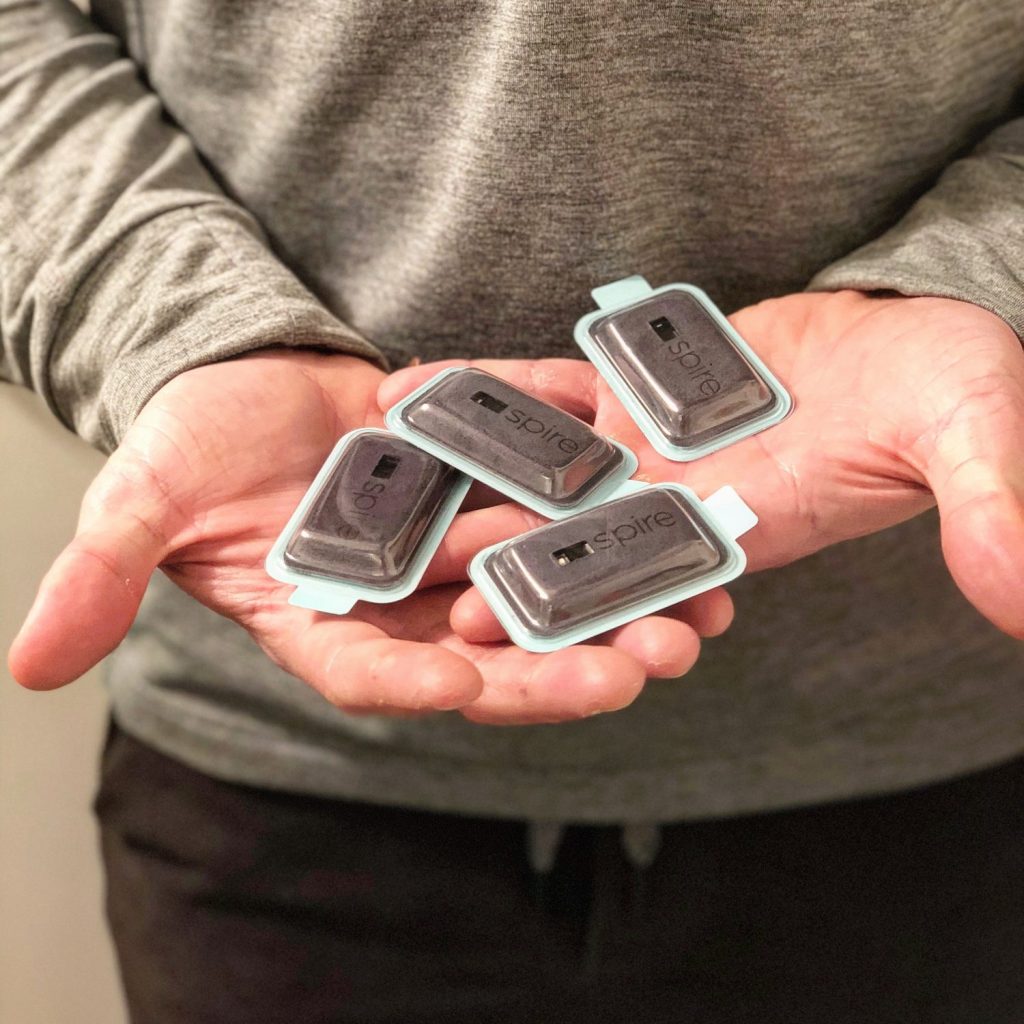
    The Health Tag devices come as a single unit, or in packs of 3 or 8. They are machine and dryer-friendly, and the batteries can last up about a year and a half. The single unit sells for $49, a 3-pack goes for $129, and the 8-pack is $299. There’s also an option for a Spire+ membership for $10 per month which gets you free replacement batteries, 50% discounts on extra tags, and personalized health reports.

    Don’t miss our posts. Follow us on Instagram (@humanfitproject).

    SETTING UP THE SPIRE HEALTH TAGS
    The set up is pretty straight-forward. You download the Spire app and create an account. You put in all of the basic information you’d expect including your height, weight, age, and sex. From there you’ll “pair” one of the tags by placing it next to your phone, and the remaining tags in your pack will automatically sync. Then you can watch a demo about how to apply them onto your clothes. Hint: it’s on the front of your waistband slightly off of center. To keep track of which tag is on which garment, you can edit the names of the tags within the Spire app by tapping “Settings” and then “Devices”.

    When you tap “LiveInsights”, you can select what types of notifications you want which include: “Reduce Stress”, “Tense Aware”, “Take a Breather”, “Sleep Better”, “Start a Sleep Routine”, “Activity Journal”, and “Get a Move On”.

    The Spire app suggests you give the tags 1-3 days of regular wear for the algorithms to calibrate correctly.

    The company says there will be an app update this week to include integration into Apple HealthKit.

    THE 7-DAY SPIRE HEALTH TAG EXPERIMENT
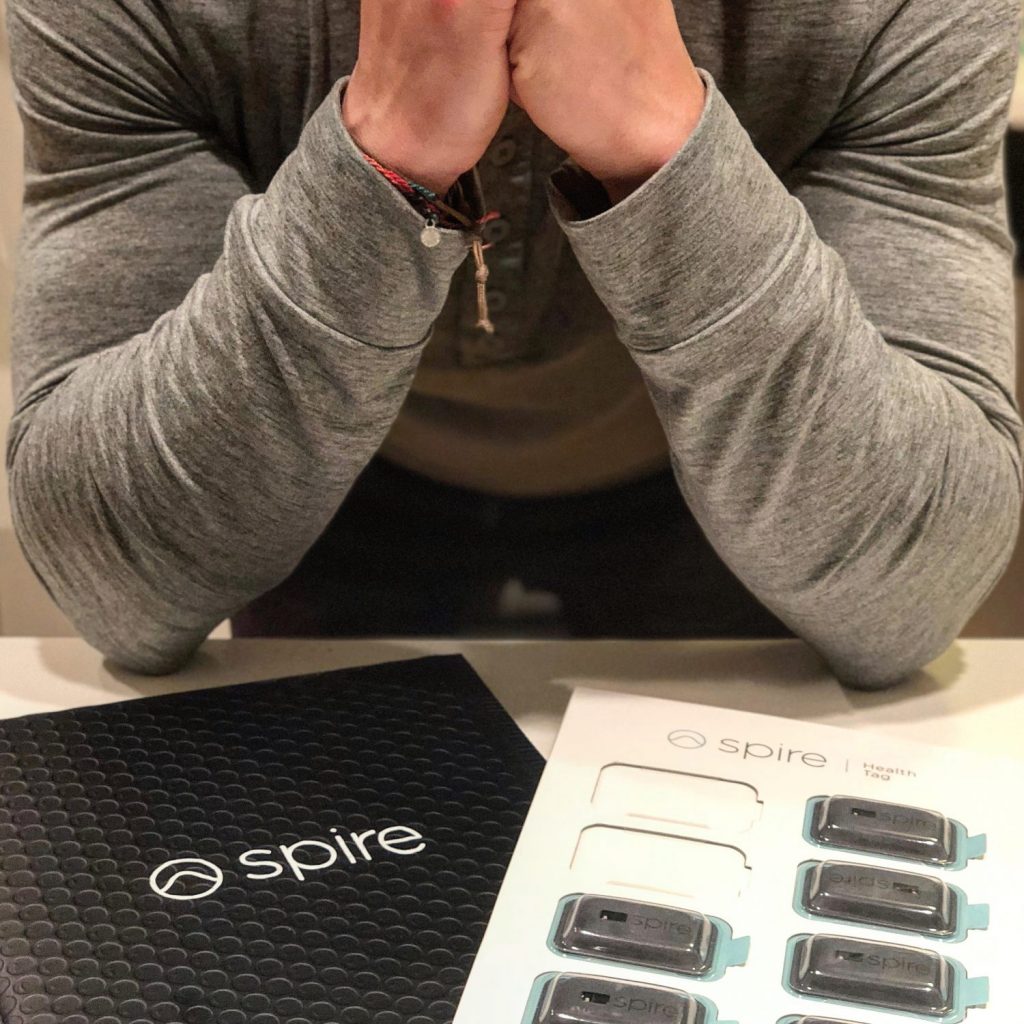
    Over the next 7 days, this portion of the article will be updated regularly to report back on what it’s been like testing and acquiring personal health data. It doesn’t matter if it’s a positive or negative report, you’ll get the honest feedback here.

    CALIBRATION PERIOD – Tuesday, December 4th

    I’ve received quite a few notifications about my breathing becoming tense. In some of those instances I was absolutely a bit stressed out or worked up, but there were also a couple times where I felt pretty calm. I also received a notification to let me know I hadn’t taken a deep breath in 45 minutes. I like both of these notifications very much as I’m not exactly the best at taking a moment to think about my breathing or take a deep breath. When I did stop a second to focus on my breath, I calmed down, which was to be expected. As for the times I was getting false alarms, I can’t judge it yet as I’m still within the 1-3 days calibration period that the company suggests.

    CALIBRATION PERIOD – Wednesday, December 5th

    I had a very similar experience this day as the first, I received a lot of notifications that my breathing was tense. Similar to the first day’s experience, sometimes I was definitely stressed, but other times I was pretty calm. I’m still giving it the benefit of the doubt as it’s still within the calibration period.

    This was also the first day I received data about my sleep and it seems pretty accurate to me. I had trouble falling asleep early on and didn’t wake up in the middle of the night. The app data confirmed this. I got just about 8 hours of sleep, then was lucky enough to get an afternoon cat nap for an hour and half which the app also clearly captured. It showed a lot of deep sleep during that nap and I’ll have to admit, I did feel like I was out cold.

    One particular thing that I really liked was the tool to help slow and deepen my breathing. Even though I was calm and relaxed in bed, I opened the app and tapped the little green bubbles in the top right hand corner. The app instructed me to breathe deeply and slowly. While I was doing this a big batch of grey and green bubbles seemed to be mirroring my breathing pattern. It felt pretty close. I think it’s possible this may have helped me nod off to sleep a little easier.

    CALIBRATION PERIOD – Thursday, December 6th

    I woke up to a small surprise this morning. When I checked my phone I had received an alert at 11:45PM that I had been sedentary for more than 45 minutes. If that happened during the day, or any time before 11PM, I would understand. The problem is, I had a bedtime goal of 11PM and I was laying down trying to sleep. Since we’re still in the in the calibration period, it gets a pass.

    Around 11AM this morning I did a fairly intense bodyweight workout with some intervals of running in place/high knees. The app did know when I was moving and when I was taking rests, which was pretty cool. I’m still trying to understand the breathing monitor in the bottom right, but that also did show an increase in breaths per minute as I progressed through the workout. The only thing I noticed that seemed a bit off was my heart rate. It seemed to have a small delay in picking up when my heart rate started to get going—I was hanging around the 60 bmp range for a bit. Then, to my surprise, it started registering my heart rate into the 180 bmp mark at one point. I was working out pretty hard, but I think a reading of 180 was a bit aggressive.

    Throughout the day I did also continue to get some notifications that my breathing was becoming tense, again, sometimes I think it was warranted where others, not so much. Unless I really am that freaking high strung and don’t even realize it. 🙂

    DAY 1 – Friday, December 7th

    I woke up in the middle of the night for about 30 minutes because of some congestion in my nose and throat. After I had fallen back asleep and got back up again around my normal time, I noticed that the app had picked that up that sleep disruption perfectly.

    The app also did a spot-on job with picking up my tense breathing from some stress I was experiencing late Thursday night. It was the kind of stress that hung around and there wasn’t much I could do to chill out so they app kept firing multiple notifications that my breathing was tense. I was impressed by this.

    After this mornings workout I got a notification to “congratulate” for a job well done. It registered a 10-minute workout, but in actuality it was more like a 60-minute workout. I got a similar notification yesterday for my 30-minute workout, but todays workout and yesterdays workout were very different. Yesterday I really got my heart pounding with cardio intervals, today was weight training and my breathing stayed very focused. The app registers anything that gets your heart rate up as a workout, for example, my walk downtown which was about 3.5 miles and took about 45 minutes, was registered. That 10-minutes that it picked up from this morning was a period where I did a small circuit to warm-up. This makes sense. Tracking weight training would be difficult. But, again, the company did not design this as a fitness product, it’s a wellness/holistic product.

    The “calibration period” is over, so I’m curious to see if I get less notifications about my breath being tense when I actually feel calm. Stay tuned.

    DAY 2 – Saturday, December 8th

    I finally washed some of my gear that was tagged. I was curious to see how the adhesive would last through the first wash and dry cycle. I did as instructed and waited a couple days to put them through. The good new is, the tag didn’t come off. The bad new is, it seems like it’s starting to. While Spire does provide some extra adhesive strips, I wasn’t exactly looking forward to replacing them so soon. I like the idea of this being a wearable that I completely forget about. Replacing adhesive strips is not forgettable. However, two other pieces of clothing that I washed didn’t seem to have any problem, the adhesive held perfectly.

    Given it was Saturday, I thought that it was also very interesting that the number of times I received notifications about my breathing “becoming tense” was way less frequent than the work week. Coincidence that my breathing was calmer on a Saturday? What else was interesting was that when I did get notifications they were when I started to do work stuff. Nice, Spire. I’ve come to appreciate these gentle reminders that my body is getting tense. It’s just a little tap that says, “Hey, Mike. Chill for a minute.”

    I was sitting on the couch and started to play with the respiratory sensor some more. I looked up the average amount of breaths per minute and it turned out to be between 16-20. I thought it would be fun to see how low I could get myself by taking big deep breaths with long, drawn out exhales. I was impressed with just how well the real-time readings were with the “wave” that would go up and down. I got as low as 4 breaths per minute for the fun of it, but for the most part I’m right in that normal range, lower in the early morning and late evenings when I’m really chilled.

    DAY 3 – Sunday, December 9th

    I’m really enjoying the sleep tracking. It’s cool to see how much light sleep, REM sleep, and deep sleep I’m getting. It’s also interesting to see that the connection between the amount of REM and deep sleep I get when it’s after a serious workout. I’ve had a couple really great workouts lately and my sleep has been long and deep. Before that when I was doing a bit more active recovery or lower impact stuff, my sleep wasn’t has heavy. I’m not obsessing over it, but it’s been nice to be able see.

    While I understand the product isn’t really an activity tracker, I do like that the data is still being captured. It’s incredible how much more I walk when I’m in NYC vs being down by the beach. When I’m in the city I walk every single place I go and the steps and mileage quickly add up, whereas down the beach, I’ve got to drive significantly more.

    DAY 4, 5, 6, & 7 – Monday, December 10th – Thursday, December 13th

    Over the four final days of the seven day test, I didn’t put too much thought into my Health Tag, I guess that’s the point to some extent. The routine I’ve gotten into was this: In the morning, I’ll wake up and check the app for my sleep and try to make sense of it (Did I not sleep well because I’ve been thinking too much? Did I sleep a ton because I worked out way too hard? Why do I think my sleep got disturbed? Was it too hot in my room?) During the day I’ll listen to the reminders to take a deep breath when I haven’t taken one in a while. At night, I’ll use the respiratory sensor to do some slow breathing like I mentioned in Day 2. That has been helpful for getting me ready for bed.

    FINAL THOUGHTS

    After several washes now, the tags have remained stuck on. That’s good. I was a little nervous.

    The respiratory sensor is helpful. I feel it might slightly overcall the tense breathing, but it seems to work very well with the guided breathing tool. Hard to say for sure, but better to be aware than unaware, I guess. It’s a “calm down” notification.

    The sleep tracking is great. I loved looking back to see how many hours of REM sleep I’d get, especially after very long surf sessions. Or around stressful days. Sometimes I have interrupted sleep, other times I don’t, but there are patterns. It’s nice to know.

    Activity tracking and the heart rate monitor are exactly what you’ve seen on other wearables. And that’s totally fine. It’s not so much about that. It’s about the breathing. The heart rate monitor may put up higher than usual beats per minute, when working out, but it seems on-point when at rest.

    All in all, it does give you some valuable data, and you can put it on and forget about it for the most part. Mine are staying on, for now. I’ll let you know otherwise.

    Editorial disclosure: This is not a sponsored post. HFP has not received any compensation for this coverage or review.

  • The Thanksgiving-inspired everyday turkey dinner

    The Thanksgiving-inspired everyday turkey dinner

    You can’t have Thanksgiving dinner everyday of the week. Maybe the flavor would never get old, but the amount of time to put that production together would. How could we make something feel like Thanksgiving a little more often and in a realistic amount of time? This was the plan.

    1. Swap out the giant roasted turkey for burgers.

    This immediately will save some time because the burgers are a significantly quicker cook. The only inconvenience is the more times you might need to wash your hands.

    Get ground turkey (for some reason in the NY/NJ area it’s hard to find the extra-lean version; there’s a difference between 93 and 99), a red, orange, and green bell pepper, one medium onion, frozen chopped spinach, salt, pepper, and a mix of spices you like the sound of. (Wink, wink.) Mix it all up, flatten them into patties and toss them on the pan at low to medium heat.

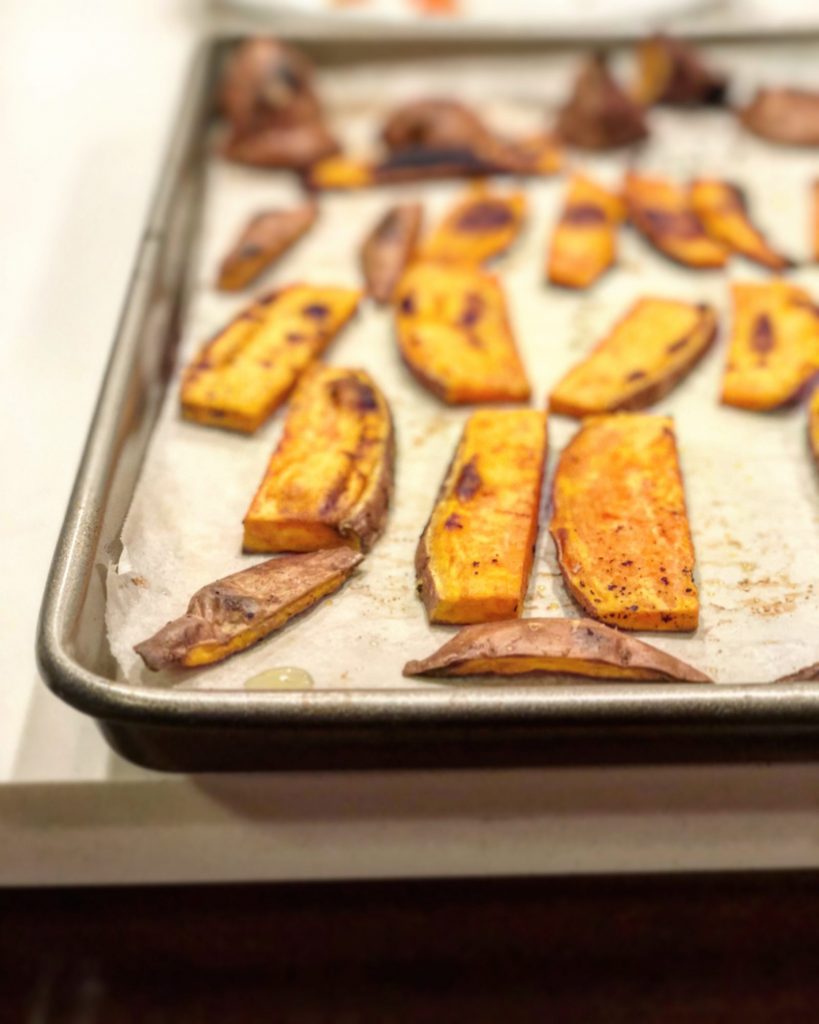
    2. Bake sweet potato fries, including the ends.

    You can make some crunchy or keep some softer—the fries are your repurpose of the Thanksgiving potatoes. Don’t throw away the ends either. If you oddly enjoy the tougher skin, you’ll appreciate them.

    One medium potato worth of fries is roughly the equivalent of 1/2 cup of oatmeal or a slice of bread. We used 1 tablespoon of olive oil (plus salt and pepper) to coat three small potatoes cut into thin fry-like slices. Toss them in the oven at about 450 degrees for 20 minutes, give them a flip and top-to-bottom rack rotation at 10 minutes.

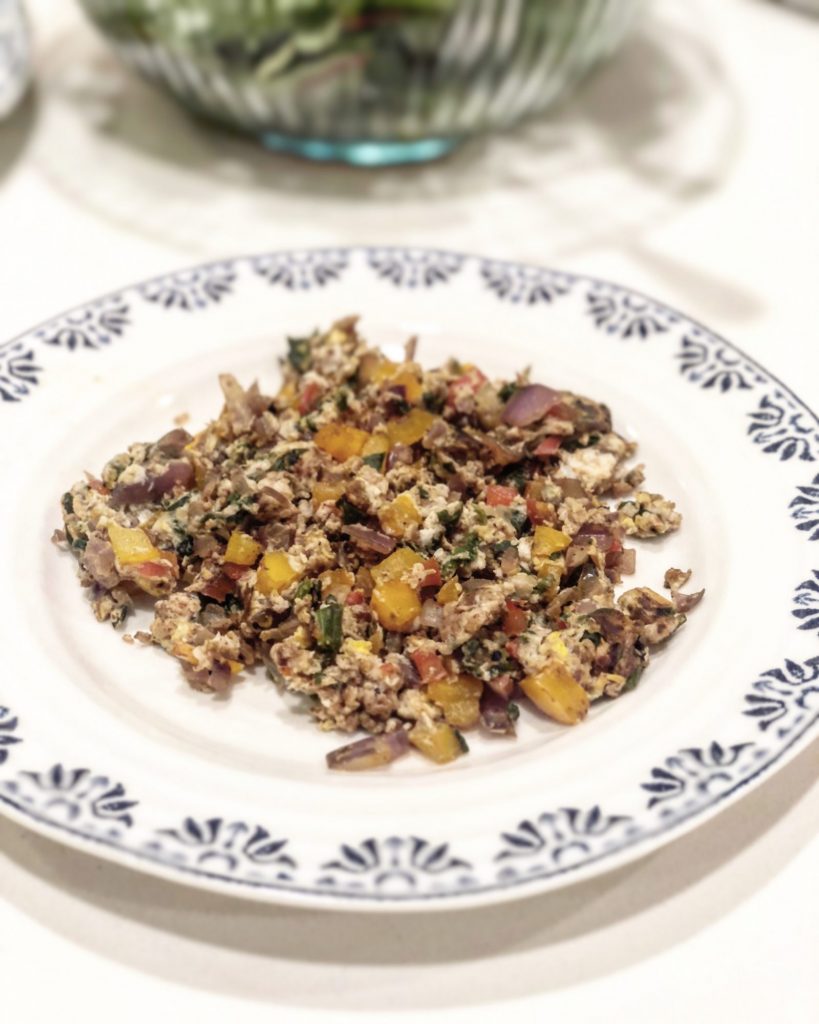
    3. The reverse scramble is surprisingly special.

    You better prepare the burgers with very large amounts of onion, bell peppers, spinach, and spices. What’s leftover from constructing the patties is kept to the side for later use. Once the burgers are done, take the extra mixing and toss it on the pan along with an egg white or two. Scramble that up into a small side that’s fluffy and intensely flavorful. Instead of being a starchy carb, or a heavy protein, you’ve got an egg scramble in reverse. It’s primarily veg, and one of the greatest rules of veg is that there are no rules to eating veg.

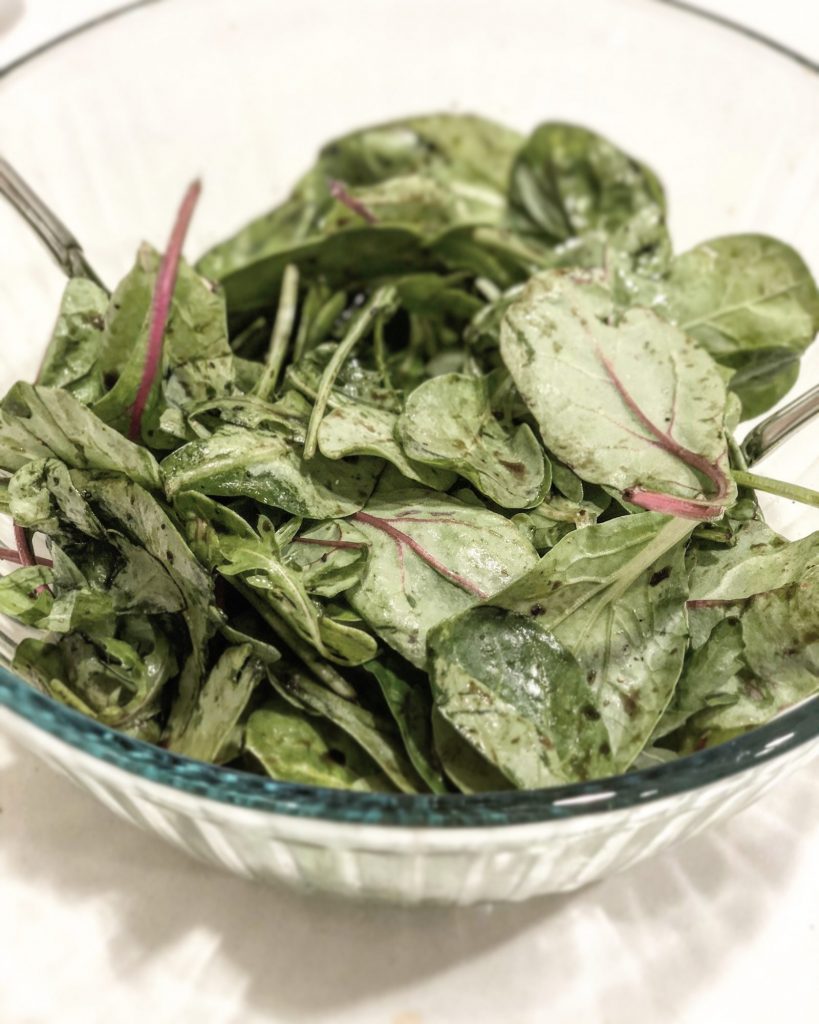
    4. The big basic spinach salad either starts or caps the night.

    It’s simply a pile of dense spinach leaves along with a light touch of extra virgin olive oil, balsamic vinegar, and cracked black pepper.

    You could probably eat this regularly.

  • 10 basic workouts and 10 ways to use them when you can’t stick to schedule

    10 basic workouts and 10 ways to use them when you can’t stick to schedule

    You almost can’t fail when you follow a plan or training schedule. (Of course… as long as you’re eating good too!) You can get your head in the right place when its time to go, and you can track your progress more easily with each week that passes. But the truth is: The real world doesn’t care about your workout routine or fitness goals. If your boss needs you in 3 states in 3 days, you’re going. If your gym is jam packed, you’re going to just have to workaround that. When these types of situations come up, the plan gets put on hold, and you’ve got to just slap something together. Maybe these 10 routines will help you get the job done until you can get back to your regular routine.

    If you haven’t tried any of our programs, check out our 30 FREE workout plans for different goals and different levels of difficulty.

    1. You could do this 3 times per week with a day of rest between sessions if you needed to.


    2. You could also do this 3 times per week with a day of rest between each session.

    3. You could do this a couple days per week, but it would be good to have pull and press days alternated in too.

    4. You could do this to compliment the workout above nicely—each twice per week, alternate them.

    5. You could alternate this with a pushing workout and a lower body workout.

    6. You could do this every other day if you needed to.

    7. You could do this whenever you want and probably about as much as you want.

    8. You could do this a lot, but would probably take a day of rest in between.

    9. You could do this whenever and how ever much you want.

    10. You could do this when you want to do something that doesn’t seem to be make much sense.

  • Avocado toast is a fitness facade

    Avocado toast is a fitness facade

    A friend of a friend said they made a “healthy choice” by going with the avocado toast. Sure, it’s healthy, but it’s also a load of carbs and fats. Here’s the deal: This friend of a friend wasn’t actually concerned about what was healthy, they wanted to change their weight and body composition. So, the fact that it is “healthy” no longer applied. Health and weight have overlap but they’re not the same thing, and they easily get mixed up.

    You can feel as though you look better when you don’t weigh as much, but can be healthy, unhealthy, or somewhere in between. And on the other side, you could completely not care about your weight and also fall somewhere in that range of health.

    Avocado toast is more than just a meal, it’s a difficult conversation about how we view and consume food. The avocado toast is about two things that are constantly contested and battled over: being aware of what you’re eating and living a life of moderation.

    Being aware of what you’re eating is a big one. Count calories, don’t count calories. It’s more about this, no, that. It can be an exhaustive back and forth. Truth is: If you’re failing to manage your weight or body composition, then either your macros (proteins, carbs, and fats) are off or you’re eating too much or too little–depending on what you’re trying to achieve. More on that discussion in our post about intuitive eating for lean muscle.

    Moderation is another headache. What does moderation even mean? It can be completely different from one person to the next. If we all were experts in moderation then why is obesity still a big problem? Are we beating the “it’s healthy” and “moderation” drums so much that it’s causing even more confusion about eating habits and food?

    A recent story on Axios, titled “Fitness industry booms, but we’re not getting fitter,” points at nutrition and eating being to blame for obesity problems. The story goes on to report that between 2007 and 2017, adult obesity is up 17%, gym memberships are up 21%, and interestingly, stress levels—one of those most largely-blamed culprits behind weight issues—was down 23%. It’s possible those gym memberships aren’t being used, but it more squarely points to nutrition and eating being the true root of the problem. That’s the avocado toast, and the things similar to it. Have you ever heard someone say, “it has x in it, it’s healthy”? Let’s use eggs as an example for x. “It has eggs in it, it’s healthy!” No. Just because it has a healthy ingredient like eggs, or if the healthy ingredient is the main ingredient, or if the ingredient is organic, there are still other things that can make it either unhealthy, or counter-productive to goals like weight management.

    Let’s make things even more difficult to follow (bare with us)…

    The idea of the Keto diet has been big the last couple years, it was Paleo a couple years prior to that, and well before that it was Atkins, South Beach, and maybe a few other smaller ones. Remember that? Avocado toast isn’t Keto because of the carbs, but could be considered Paleo because “the caveman diet” could definitely have included avocados as a harvestable fruit, and bread is a grain. But Paleo isn’t as trendy now, and it’s all about Keto, right? Does that mean avocado toast is out, too?  It doesn’t work with Atkins either because of the carbs, and Atkins was similar to Keto, just an older concept. Avocado toast must fall in no specific diet then. It’s just a healthy recipe that could go either way for people depending on how it’s prepared. Is that where the “moderation” approach comes in? Even more confused now? You should be.

    Deconstructing the avocado toast

    The bread. There are so many different types of bread, all of which can vary dramatically in calories and carbs. Are you having 50 calories and 7 grams of carbs or 200 calories and 30 grams of carbs? One slice or two?

    The avocado. One medium avocado is 250 calories and has 23 grams of fat. How much of that globbed on the bread?

    The lack of protein. One egg with avocado toast doesn’t cut it. Hell, two doesn’t even cut it. Seems like it could be a bit low on the protein for all the carbs and fat. And if you’re using whole eggs then you’re just increasing the (albeit healthy) fat even more.

    The case for the custom-order or homemade avocado toast and second guessing eating decisions

    How about a small egg scramble as the base, two super-thin, low-carb slices of bread with only a gentle smearing of avocado on each?

    The macronutrient breakdown of everything that goes into your avocado toast could significantly vary from one to the other. It is a healthy decision, yes. There’s no question about that. But how you include it in you life could either work or work against your goals.

    How much are you eating? How often? What’s actually in it? And where does this fall on the highly-subjective scale of “moderation?”

    There’s nothing wrong with managing your weight and looking the way you want to look. There’s a clear trend starting to say that there is, but don’t let that trend fool you into thinking that all things healthy are going to help you hit your goals.

    You can enjoy your avocado toast, but don’t let this healthy option fool you into thinking it will help you lose those last five pounds.

    Need a workout plan? We’ve got 30 free complete training plans you can follow.

  • How to Build Something Big with Aly Orady, CEO of Tonal

    How to Build Something Big with Aly Orady, CEO of Tonal

    Aly Orady spent over 15 years in technology building super computers. Professionally, he was doing very well, but his health started taking some hits. While he struggled with his weight since childhood, things progressively got worse as the years passed.

    After being diagnosed with diabetes and sleep apnea, Orady decided it was time to tell the supercomputers they’d have to be a bit less super while he focused on his  fitness. In 2013, he quit his job for nine months and lost 70 pounds.

    Throughout that process,  he learned about how difficult strength training is for most people.

    Ultimately, he wanted to figure out a way to strength train from the convenience of home, shrink the equipment down, and have modern measurement tools and on-demand coaching to support him. In 2015, Orady began quietly working on Tonal, a wall-mounted fitness system using “digital weights”, a first-ever technological contribution to fitness.

    Now that it’s officially on the market, check out what we thought of it after our first look here.

    Orady knows a thing or two about technology, fitness, and business. Here are some lessons on how to be a little bit better at whatever it is you do, from the Bay Area CEO himself.

    Aly Orady, Founder and CEO of Tonal used his weight loss journey to inspire his creation.

    What was the worst idea you ever had and what did you learn from it?

    Well, this isn’t my first startup. I had another startup where we were trying to reinvent the way desktop computing was done. The startup was, by some measure, successful. We got to a point where we were raising $10 million and we were selling $10 million worth of product every year. In many other ways, it was a huge failure. We were trying to get to the point where we were selling $100 million worth of product a year.

    It was a terrible idea because I didn’t really know what I was up against. We thought that we had reinvented the way desktop computers worked but we failed to really recognize who all the key players were in the industry, what control they had, what levers they had and how we basically had no great path to get what we believed to be a great technology out to the world.

    It’s not just about the technology sometimes. It’s about figuring out how to really deliver it to the end user, understanding how the ecosystem works. That was a six-year lesson for me.

    Say someone has a great idea, what should be their very first move?

    I would tell people to write down the three or four or five things that they’re going to need in order to be successful and then go find, on that list, the thing that they’re least comfortable with. Go figure that out first.

    As entrepreneurs, and actually it’s human nature, we all have a tendency to want to immerse ourselves in the most comfortable parts, the things that we’re so good at. We tend to put off and neglect the pieces that we’re not good at. If you really believe something is important, you have to go after it, even if you’re not comfortable.

    I’ve looked at a lot of different ideas over the years. I tell myself, “You’re not allowed to write code until you’ve talked to at least ten customers first” or “You’re not allowed to do xyz until you do this other really hard thing first.” It’s about really pushing yourself out of your comfort zone, doing things that are important that we might otherwise be inclined to want to put off.

    What does it actually mean to be an entrepreneur aside from “long hours” and “hard work”?

    At the end of the day, the buck stops with you. Whenever something absolutely has to get done, whenever something goes wrong, people will help you. Employees who are passionate and employees who are driven will do as much as they can, but there comes a point where you’re ultimately responsible and what that translates into is, as an entrepreneur, you’re the one who is doing all the gap-filling in the organization.

    You’re constantly trying to hire people to fill gaps. You’re doing intern jobs. You’re putting your finger in this hole to keep the water from leaking out. You’re trying to whack this mole over here. That just turns into more work than you ever expected.

    Often, it’s a surprise. A lot of these things happen, you can’t anticipate a lot of this stuff. It’s happening last minute. That’s probably the hardest thing. You’re trying to constantly hire people to do your job and you never succeed at that. There’s just always one more person you’ve got to hire, if you’re being successful.

    What’s your take on learning from failure and staying positive when everything seems to be going wrong?

    I’ve actually always had this saying, which is, “As an entrepreneur, you have to have thick skin and not a thick head.” What I mean by that is a thick head means you’re stubborn. You keep insisting on doing the same thing over and over again without learning. A thick skin means you take failure in stride and you learn from it.

    You will fail and you have to take what you’re learning and use that as an opportunity to iterate and do the next thing, not just keep persisting mindlessly at doing the same failing thing. That’s really, I believe, the most important part, driving that cycle of learning.

    Entrepreneurs by definition are doing something that’s never been done before. The path forward is not clear. You have to discover that path and you have to do it with an open mind and an open heart.

    How do you stay ahead of the competition?

    You have to be very aware of your strengths and very aware of their blind spots. Every company, as it grows, develops blind spots, even its own. As we grow, at some point, we’re [Tonal] going to develop blind spots and have to work hard to try and see what we can’t see. If you’re aware of the places that your competition naturally will not go, it really shows you where a lot of your opportunity is.

    How do you cause a positive disruption and spark change?

    My first instinct is, and I know this sounds cliché, but you have to challenge assumptions. You have to challenge conventional wisdom.

    I feel like there’s this thing that I call institutionalized discouragement. What I mean by that is if you walk into a kindergarten classroom, and you say, “Hey, kids. Raise your hand if you think you’re an artist,” everyone will raise their hand. If you walk into a fifth-grade classroom and ask the same question, you’ll be lucky if you see two or three hands. At some point, the kids were told or came to believe that they weren’t artists. They gave up on being an artist and they no longer believe that it’s possible.

    I’ve been inside big companies and I’ll say things like, “Hey, why don’t we do it this way?” or “why don’t we do this?” or “have we considered that?” and everyone in the room will look at you and with one voice are like, “Oh, that’s not possible.” At some point, the institution had learned not to do certain things, not to try certain things, not to think in certain ways. That limits the possibilities for them. If you want to be innovative, if you want to be disruptive, you have to look beyond all these things that people think are impossible.

    Who or what was your childhood inspiration growing up?

    They’ve changed tremendously. Its’ funny. I know this is crazy but I remember watching Gilligan’s Island as a child. My favorite character was The Professor. I was the type of kid who would take my toys apart rather than playing with them. I was more interested in how they worked. I think I was always inspired by just curiosity and how things worked.

    And how have they changed in your adult life?

    Right now my inspirations are all amazing business leaders. I’ve found that the greatest technological innovations often happen by yourself in a lab late at night whereas building an amazing business takes thousands of people working together and figuring out how to lead thousands of people with their various backgrounds and attitudes and emotions and skills and blind spots and strengths. That’s an incredibly difficult thing to do and I have tremendous respect for people who have done it well, anyone from Jeff Bezos to Howard Schultz to Steve Jobs. It’s really inspirational how they are able to build up those organizations and build the DNA to get them to do what they’ve done.

  • Is Tonal a Part of the Future of Fitness?

    Is Tonal a Part of the Future of Fitness?

    Anytime I hear  the words, “at-home fitness equipment”, I immediately think one of two things: a gimmick and/or a dust collector. The same goes when I hear about a “revolutionary” new supplement. But with advances in technology only getting faster and faster by the day, that might be too close-minded. Is it possible that a piece of fitness equipment could be as standard as a refrigerator one day? Maybe. And if so, what would it look like?

    Chances are you’ve heard of Peloton. It’s a bike you keep in your living room, but it’s also considered somewhat of a fitness phenomenon. In fact, they’ve been so successful that there’s probably going to be an IPO in 2019. But companies have been making bikes, ellipticals, and rowers for decades. What made Peloton pop? The technology.

    They built an engaging experience and connected community around their bikes, their coaches, their measurement tools, and leaderboards. If you’re into riding, or cardio and endurance, they seem to be doing everything right both for the user and the company investors. But what are the options for the strength crowd? That’s where Tonal comes in with their wall-mounted at-home fitness system. But what could separate Tonal from all the other at-home strength building systems? The same as Peloton—the technology. It’s helpful they have a good design too.

    According to the company, Tonal is “the world’s most intelligent fitness system.” Now that’s a strong statement. 

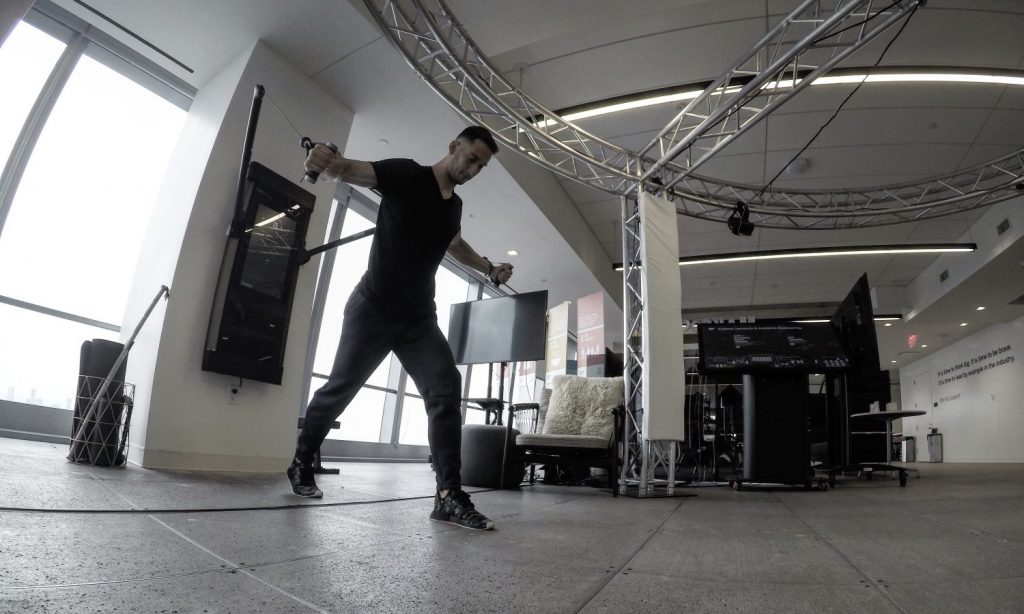
    Testing Tonal on September 19th, 2018 at Hudson Yards in New York City

    On the outside it looks like a vertical TV, but combined with adjustable arms you’d see at a cable station in most gyms. You can adjust the handles just like you would with any other cable system, essentially making it possible to replicate most, if not all, strength training exercises. You can squat, deadlift, row, press, chop, you name it. OK, that’s smart, but not something that hasn’t been done before.

    The inside of Tonal is where it starts to get more interesting. It’s a super-computer for fitness.

    Traditional gym equipment uses weights or gravity for resistance. Tonal uses electromagnetic forces or “digital weights.” Here’s the deal though: It’s not that Tonal’s “digital weights” are more effective than old-fashioned iron, it’s the data and intelligence it gathers from them. “We’ve never been able to measure strength before,” says Tonal founder and CEO, Aly Orady. “We can determine quality at a mathematical level that wasn’t possible before,” he adds. And what this means is: Instead of simply counting your reps as you would with free weights, Tonal will measure the quality of your reps, primarily based on power and tempo, and with the help of algorithms, prescribe you with the perfect amount of resistance to use during your workouts. It will then track your progress over time.

    Aly Orady, the founder and CEO of Tonal drew inspiration from his own weight loss journey to develop the Tonal product

    Related: How to build something big with Aly Orady, CEO of Tonal (coming soon)

    Tonal’s digital weights even had some fun variations. If you’ve ever seen chains on a barbell, you know that it gets harder as you lift it. Tonal can create that. It can also create something called a “heavy negative” where you’d need to fight a heavier load on the exercises descent. There’s even a built-in function that senses when you’re struggling and will act as a spotter for you. 

    Aside from the bells and whistles of the digital weights, there’s a unique promise with the on-demand coaching. While finding the right amount of resistance to use is difficult, so is finding the right plan to follow. More specifically, if you want bigger biceps, or a stronger deadlift, or to get faster for running, those are three different goals that require different plans. That’s why Tonal has a team of personal coaches along with a collection of goal-based complete workout plans for step-by-step guidance.

    Of course all of this comes at a cost. The Tonal wall unit is $2,995, there’s an accessories kit for $495, and a monthly subscription of $49 for a minimum of 12 months. That’s by no means cheap, but if the results are solid, then costs can always been justified. 

    Tonal: the quick HIIT thoughts

    • Measuring strength is a big deal, not only for beginners but for the advanced athletes as well. There could be something here with the “digital weights”. Instead of guessing and testing, and carrying around a log of your lifts, Tonal can do all the precision work.
    • Having a variety of different plans based on goals is good. That eliminates the possibility of wasting time on the wrong program. 
    • On-demand coaching seems cool, but will be curious to see how they keep it fresh and interesting. (I haven’t used it enough to say for sure.)
    • I could actually see a Tonal in a living room. It’s not an eyesore like other piece of at-home fitness equipment.
    • The more conversation there is about how important strength training is, the more chances there are for Tonal to end up in homes.

    The Bottom Line

    Overall, I think there’s potential for this to be popular. As for it’s effectiveness, we’ll have to wait and see what the results show.

    The design is nice, and the technology and coaching sound very helpful. Do we really need this much tech for strength training? It’s probably not essential, but a nice to have. I’m not quite sure if I could ever see myself giving up weights or the gym completely, but if Tonal can remove all of the thinking that goes behind following a plan and keep me excited to come back then it’s possible to find some wall space. As for the price, it’s expensive, but if you compare it to high-end club memberships and private personal training, maybe not so much. 

    What it’s like to start with Tonal

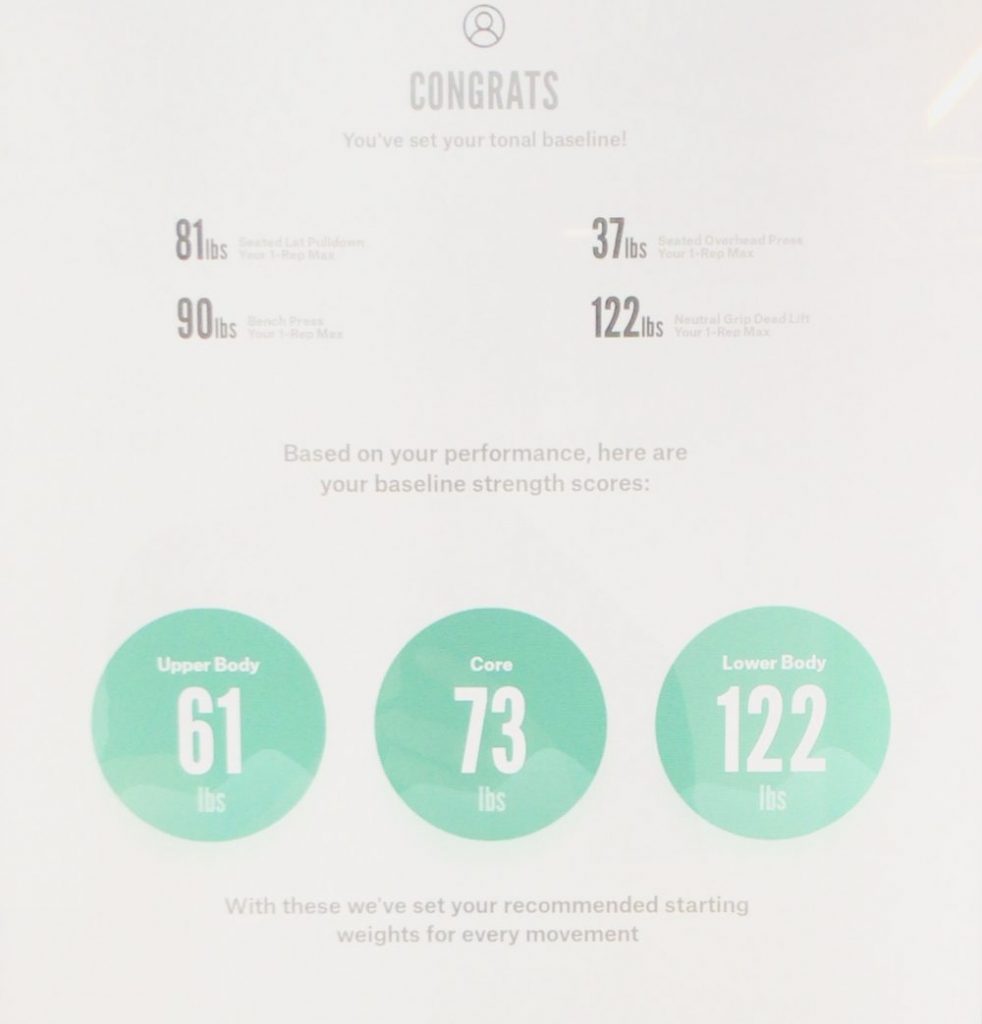
    After creating an account, Tonal will walk you through a series of exercises to find your fitness benchmarks. This includes a lat pull down, an overhead press, a bench press, and a deadlift. Based on the “score” you get for those exercises, the system will provide you with the right amount of resistance to use for those and related exercises in a program. 

    Tonal Fitness Benchmarks
    The recommendations you receive after taking the benchmark test

    For more information on Tonal,  visit their website at Tonal.com or follow them on social @tonal.

  • The Foundational beginner workout plan to build muscle

    The Foundational beginner workout plan to build muscle

    Looking for a beginner workout plan you say? Let me tell you a little story first.

    I think I graduated high school 135-pounds, maybe 140. Whatever it was, I was super skinny, and I hated it. In my opinion, people don’t give the skinny guys that get big, enough credit. It’s still a lot of work. Whatever, enough of my own personal story. If you’re skinny and want to add slabs of mass, here’s how I changed all of that:

    First thing: I started lifting on a basic beginner workout plan for three to five days per week. I didn’t love it at first. In fact, I actually didn’t like it at all. But then I started to see veins popping out of my arms a bit more, abs getting more defined, a back that was widening, chest that was broadening, etc.

    If you’re new to exercise, you will find our how-to guide of the 20 best exercises for beginners helpful.

    Second thing: I started to absolutely demolish food. For the most part it was all very clean foods: loads of chicken breast, lean beef, eggs, fish, etc. But one other little secret was peanut butter sandwiches. I mean, I think I bought and ate more peanut butter than anyone on earth for like two-three years of my life.

    Long story short: I lifted and ate like an animal and that’s what’s going to do it for you too.

    For a more in-depth look at food and dieting, check out our comprehensive piece on intuitive eating for lean muscle to learn what to eat, when to eat, and how to figure out what works for you. Also, our story on the 25 best muscle-building foods is a great resource for overhauling your grocery shopping list.

    Now, let’s move onto the program…


    How the beginner workout plan works

    No fluff, no gimmicks. That’s how we roll around here, and that’s always how HFP will roll.

    The key thing about the Foundation workout plan is that the exercises are very basic and the total amount of work is conservative. Because you’re relatively new to exercise and working out, this will provide you with a good base of fitness without pushing you too far to start. Another program you might want to explore is out Introduction/Transition workout plan.

    Directions for this beginner workout plan

    Monday, Tuesday, Thursday, and Friday are workout days. Wednesday, Saturday, and Sunday are off/recovery days.

    Complete this beginner workout plan for four weeks. After the forth week you may recycle the plan, however, add 1-2 sets per exercise and attempt to increase the weight used.

    After you’ve progressed beyond the beginner workout plan, check out our listing of all 30+ FREE workout plans you can follow next. There are many different options for different ability levels and specific goals. If your gains seem to be coming along a little slow, check out our piece on the top 10 ways to build muscle faster.

    The Foundation Workouts

    DAY ONE: Legs and Intervals

    1. DB Squat
    3 sets x 10

    2. DB Forward and Reverse Lunges
    3 sets x 5 each leg and direction

    3. DB Plie Squat
    3 sets x 10

    4. DB Step Up
    3 sets x 10

    5. Burpees x 50

    DAY TWO: Shoulders and Abs

    1. Alt. Single-Arm DB Shoulder Press
    3 sets x 10

    2A DB Side Lateral Raise
    2B DB Front Raise
    2C DB Rear Flye
    3 sets x 12-15

    3. DB Shrug
    3 sets x 10

    4. Cable Face Pull
    3 sets x 10

    1. Cable Crunch
    3 sets x 10

    2. Cable Rotations
    3 sets x 10 (each side)

    3. Planks
    3 sets x failure

    DAY THREE: Chest and Triceps

    1. DB Chest Press Variations
    5 sets x 10 (3-5 variations)

    2. DB Flye
    3 sets x 10

    3. Push Ups
    100-200 reps as quickly as possible

    1. Close-grip Presses
    3 sets x 10

    2. BB Skullcrushers
    3 sets x 10

    3. Bar-Cable Pushdown
    3 sets x 10 reps

    DAY FOUR: Back and Biceps

    1. Trap Bar Deadlift
    5 sets x 10

    2. Single-arm DB Row
    3 sets x 10

    3. Pull up (or Inverted Row)
    3 sets x as many as possible

    1. BB Curl
    3 sets x 10

    2. Lying Cable Curl
    3 sets x 10

    3. Open-grip Concentration Curl
    3 sets x 10

  • The 3-day Detox workout plan for a slow and steady party recovery

    The 3-day Detox workout plan for a slow and steady party recovery

    The summer makes us all a little weird. Cinco de Mayo, Memorial Day, Fourth of July… it’s like full-blown party mode. These are the months that can crack even the most dedicated fitness buffs. Then again, there some of us that figure, if we train like a lunatic and eat clean 99% of the time, what’s the big deal it we get a little buzz on and eat crap food? Well, it’s not a big deal. But be prepared for a slower start to the next week.

    Don’t think we need to tell you the effects of alcohol on the body. It’s not good, but whatever. This isn’t a regular thing… For some good ideas on how to find the happy medium, check out this strategy piece on how to drink alcohol and still build muscle and lose weight.

    The Detox workout plan is not a gimmick—here’s how it works

    It sure sounds like one. Maybe we should have thought of that beforehand? Well, it’s not a gimmick. It’s a cool name. We think so anyway. The Detox workout plan is simply a scaled-back week of workouts. Let us explain as best as possible:

    You start the night with a couple beers. Then toss in some pizza or wings. Then the tequila shots come out. Before you know it, it’s 3:30AM, you’ve got a shard of glass in your big toe, your left rib feels oddly sore, and the $60 bucks that was in your wallet has magically disappeared.

    Fast-forward to 1130AM or whenever your slow, stinky, dehydrated body gets out of bed (or off the floor), the gym and working out is the last thing on your mind. Here’s what you do:

    Start drinking water aggressively and either take the day off or decide to get into the gym right away. But, if you think you’re going to do a 10-round circuit you’re on delusional. You’re going to need something a bit easier. Something to stimulate your muscles, wake up your metabolism, but chilled out enough so you don’t want to hurl. That’s the Detox workout plan. Consider it a reset. If you enjoy this Detox workout plan, make sure to check out the version 2.0 of the Detox workout plan.

    Directions

    You can begin following this immediately, or wait until Monday morning. Complete for one week then get back onto your regular training schedule. Don’t have a plan? Well, we’ve got over 30 of them that are completely FREE.

    The Detox Workouts

    Monday: Full Body Flush #1

    Complete 3 sets of each exercise for 12 repetitions with 60 seconds rest between each set.

    1. BB bench press
    2. BB bent-over row
    3. BB bench
    4. BB back squat
    5. Planks x 60s

    Finisher: Complete 3 rounds of the following circuit as quickly as possible.

    Burpee x 10
    Push-up x 10
    Sit-up x 10

    Tuesday: Active rest

    This means go ride your bike or walk or hike or do something…

    Wednesday: Full Body Flush #2

    Complete 3 sets of each exercise for 12 repetitions with 60 seconds rest between each set.

    1. BB shoulder press
    2. Pull-up
    3. BB deadlift
    4. Hanging leg raise (or knee raise)

    Finisher: Complete 3 rounds of the following circuit as quickly as possible.

    Renegade row x 10
    Thruster x 10

    Thursday: Steady-state cardio

    This means 30, 40, or 60 minutes at @60% max

    Friday: Full Body Flush #3

    Complete 3 sets of each exercise for 12 repetitions with 60 seconds rest between each set.

    1. KB sumo squat
    2. Push-up
    3. Single-arm DB row
    4. Superman

    Finisher: Complete 3 rounds of the following circuit as quickly as possible.

    KB swing x 20
    Burpee x 10

    Saturday: HIIT (high-intensity interval training)

    Do this for approximately 15-20 minutes. Want some good ideas? Check out the 30 best HIIT workouts on HFP.

    Sunday: Complete rest

    The Detox workout plan was designed by HFP contributing expert Tim McComsey and demonstrated by Jersey City personal trainer, John Gioffre.

  • The Pancake, Pizza, and Popsicle Diet

    The Pancake, Pizza, and Popsicle Diet

    I’ve always been upfront about my take on food, nutrition, diet, whatever word you want to use for it. To me food is fuel. I’ll even admit, there have been many years of my life where I sacrificed eating the foods that taste great, because I figured the best way to get a true understanding of how my body would work on food was by going as basic and bare essential as possible. Most might say that’s sad way to live, and it is extreme, but it did teach me everything I needed to know about how my body responds to certain eating habits.

    After developing that feel for what worked and what didn’t work, I loosened up a little. While I still follow what most would call a “strict” diet, it’s not because I want to restrict myself, but because I enjoy eating basic. For more on my take on food and learning to build a lifestyle diet plan that works for you, check out my piece on intuitive eating for lean muscle. Also, if you’re just starting, you might find our list of the best 25 muscle-building foods very helpful.

    Now, onto this diet with pancakes, pizza, and popsicles. That’s what you came for in the first place, right? You still probably don’t believe me, but give me another paragraph or two. You’ll see.

    This is a perfect example of why it’s worth spending some time eating the basics and learning what you’re putting in your body. Eventually, you won’t only realize when you can really let loose and cheat, but you’ll also learn just how easy it is to make some of your favorite foods work for your needs.

    The secret is the preparation and portion control. We’ll get into that below, but let’s start with a structure on how pancakes, pizza, and popsicles could actually become a somewhat regular meal plan. I say somewhat, because, come on, you don’t need pancakes, pizza, and popsicles every single day, even though, I know, it sounds fantastic.

    The basic diet structure

    Eat 5-6 times per day. Breakfast, lunch, dinner, and snacks. There should always be a protein source in each meal. Portion controlled, homemade pancakes and pizza can be eaten a couple days per week. Other days of the week should be the meal plan basics such as eggs, protein shakes, chicken, turkey, etc. Popsicles can be eaten throughout the week. (Again, I refer to the piece on intuitive eating which has a sample meal plan)

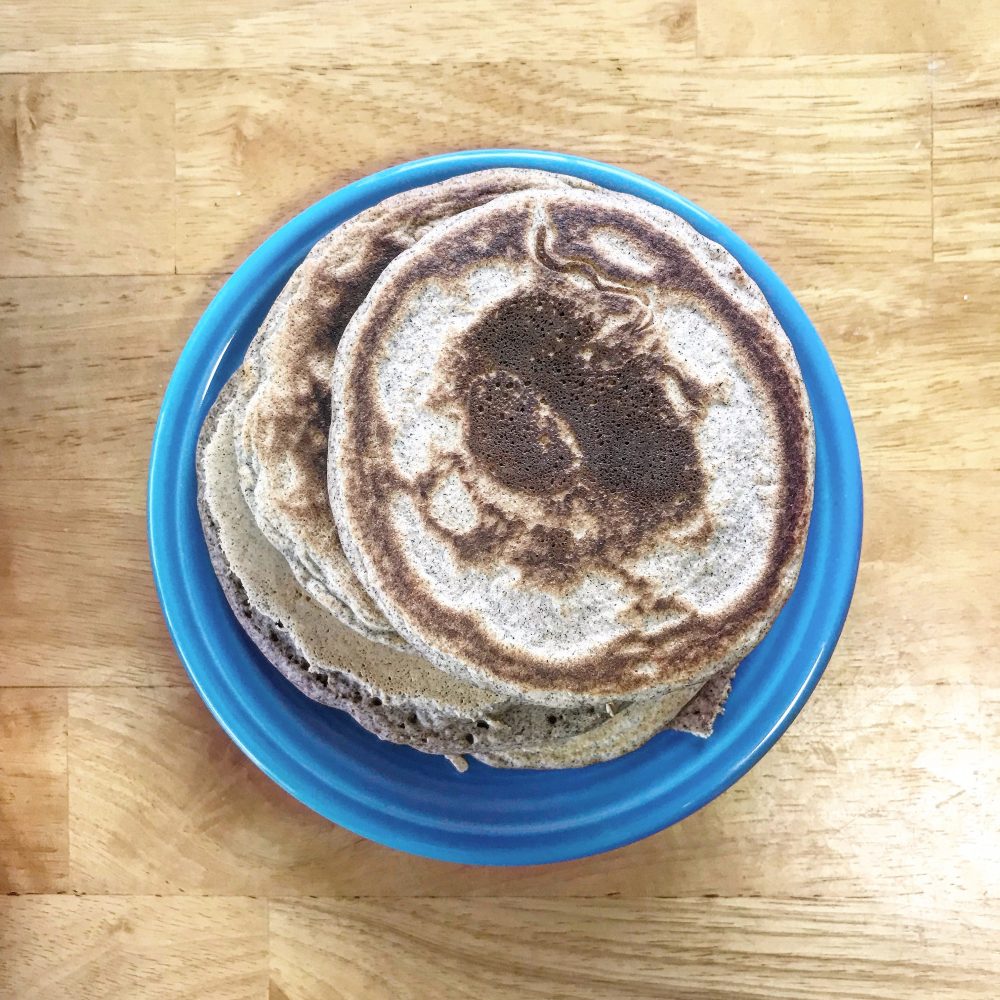
    Breakfast: The lightened up pancake

    Let’s start by looking at IHOP’s Original Buttermilk Pancakes. Five of those are 670 calories, 24 grams of fat, 94 grams of carbs, and 21 grams of sugar. And I’m not even sure if that accounts for the butter and syrup, it’s not worth calling them, you get the point.

    Here’s what we change:

    • We switch to buckwheat mix for more fiber
    • We don’t need butter
    • We can swap in unsweetened almond milk for the whole milk
    • We can use stevia powder instead of syrup
    • We can use protein powder to bump up that number and offset the carbs.

    How to make them:

    ⅓ cup organic buckwheat pancake mix
    Two egg whites
    4 oz of unsweetened almond milk (not 100% necessary either)
    ½ scoop of whey protein
    Water

    When serving them up, go by the pancake mix package. A ⅓ cup makes two pancakes (5 inches or so) at 160 calories. With the extra protein powder (+60 calories), two egg whites (+40 calories), and 4 oz of almond milk (+20 calories) you’re up to 280 calories, 31 grams of carbs (5 of which are fiber), and 15 grams of protein, and only 2 grams of fat.

    The protein compliment:

    Couple this up with even more protein, preferably eggs. Maybe 4-5 whites and 1 whole. You’re looking at approximately an additional 100-120 calories, 16-20 grams of protein, minimal carbs, and 5 grams of fat

    Meal totals:

    380-400 calories
    31 grams of carbs (5 fiber = 26 net carbs)
    31-35 grams of protein
    5 grams of fat

    The close comparison of a typical breakfast of eggs and ½ cup of oatmeal:

    250-270 calories
    28 grams of carbs (3 fiber = 25 net carbs)
    17-21 grams of protein
    5 grams of fat

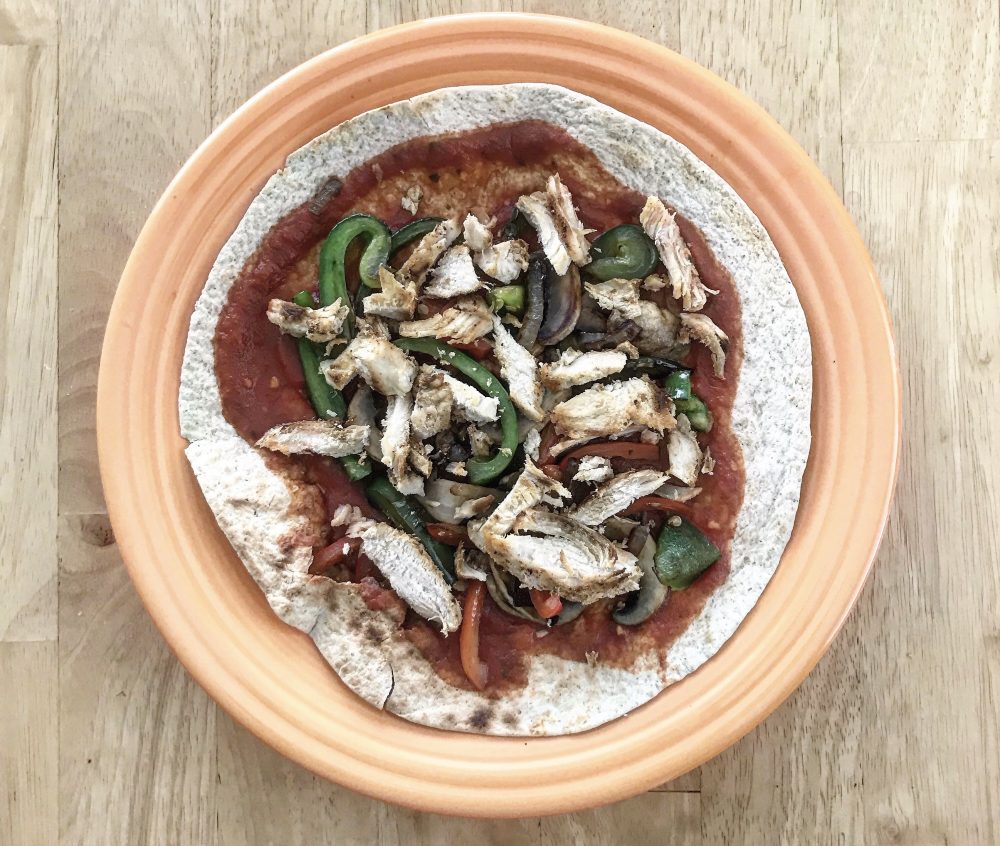
    Dinner: The skinny pizza

    Let’s put a single slice of traditional Italian dish pizza in the hot seat. We’re looking at approximately 285 calories, 10 grams of fat, 36 grams of carbs, and 4 grams of sugar. Remember, this is one slice. Just one.

    Here’s what we change:

    • We swap in Mission’s carb-balance wraps instead of traditional pizza dough
    • We don’t need cheese
    • We can use grilled chicken to bump up the protein.

    How to make them:

    One large Mission carb-balance wraps
    4 oz organic pasta sauce
    4 oz grilled chicken
    ¼ cup thin-sliced bell peppers
    ⅛ cup onion
    2-3 small mushrooms
    Red pepper flakes

    One large Mission carb-balance wrap is 210 calories, 32 grams of carbs (only 6 net carbs because 26 of them are fiber), 9 grams of protein, and 5 grams of fat.  The 4 oz organic pasta sauce is approximately 30 calories, 5 grams of carbs, minimal protein and fat. The 4 oz of grilled chicken is about 185 calories, 35 grams of protein, minimal carbs, and 2 grams of fat. The bell peppers, onion, and mushrooms combined are approximately 30 calories, 5 grams of carbs, and minimal fat and protein.

    Process:

    Pre-heat oven on high and lightly crisp both sides of the wrap while simultaneously grilling or pan frying the chicken. Slightly cook the bell pepper, onion, and mushrooms so they are a little soft. Add pasta sauce to the wrap, add the bell pepper, onion, mushrooms, and 2 oz of chicken, and place back in the oven for a few minutes. Watch for browning.

    The protein (+veggie) compliment:

    2 oz of the grilled chicken can be added to the pizza, the other 2 oz could be eaten separately on the side. The purpose of this is to keep the pizza light so it doesn’t break, but you’re still consuming some extra chicken as a side to keep the protein contents of your meal up.

    Adding a favorite vegetable of yours such as broccoli is a nice way of keeping calories down, but giving you a serving of antioxidants, nutrients, and fiber.

    Meal totals:

    Approximately 455 calories (whole pizza/wrap)
    42 grams of carbs (26 fiber = 16 net carbs)
    35 grams of protein
    5-6 grams of fat

    The comparison of a typical dinner and the tradition

    The typical dinner:

    If you’re using the carb-balance wraps then net carbs are going to be very low. That could be a good thing if you’ve eaten more carbs with the pancakes in the morning, but could also work against you if you’re training hard and not eating enough carbs through the rest of the day.

    The traditional pizza:

    It’s no comparison here. One slice of traditional pizza is almost 300 calories of all carbs and no protein. The macronutrient breakdown of the “skinny pizza” is far superior with the additional protein, lower carbs, and lower fat contents.

    Dessert: The craving-curbing protein popsicle

    How about this? The calories in a Fudgesicle pop might even be a little bit less than the protein popsicle. Oh, no. Relax. It’s the macronutrient breakdown that matters. Let’s look at the Sugar-Free Fudgesicle numbers: 1 pop is about 35 calories, 2 grams of fat, 8 carbs (2 of which are fiber), and 2 grams of protein.

    Here’s what we change:

    • We don’t use the several processed ingredients in the popsicles
    • We make the base with protein, not carbs or fat

    How to make them:

    1 scoop protein (makes 3 pops)
    Splash of coffee in each
    Splash of unsweetened almond milk in each
    8 oz of water (makes 3 pops)

    One scoop of protein is about 100-120 calories, 2 grams of carbs, 25 grams of protein, and 1 gram of fat. Coffee is negligible amount of calories, carbs, fat, protein, etc. A splash of unsweetened almond milk in each (2-4 oz total for 3 pops) is about 20 calories and under a gram of carbs, protein, and fats.

    Process:

    Do you think we really need to explain this one?

    No food compliment necessary, use them as a craving curber

    These things are all protein. If you’re a little hungry on the late night, grab one. Hell, you can have three, it’s the equivalent of drinking a protein shake, not eating a valueless traditional popsicle. And they taste very similar.

    Snack total:

    Approximately 100-140 calories (3 pops; 34-46 calories per pop)
    2-3 grams of carbs
    25 grams of protein (3 pops; 8 grams per pop)
    1 gram of fat

    The comparison of a Fudgesicle and the Protein Popsicle

    As mentioned above, the traditional Fudgescicle is all fat and sugar with minimal protein, these popsicles provide a similar taste and have a completely superior macronutrient breakdown. They are guilt-free. It’s an easy switch.

  • From the Weekend 5K to a 100+ Mile Ultra: How it’s even possible

    From the Weekend 5K to a 100+ Mile Ultra: How it’s even possible

    Curious what the optimal plan for attempting a 153-mile run would look like? It’s mostly something like this: 12 hours of sleep per night and a nap or two during the day, a work schedule that allows you to run whenever you want, and minimal stress in your life. Oh, and you might want five years to prepare for it.

    Alex Anyse (@onemileonesmile) had none of that when he first attempted the 153-mile Spartathlon from Athens to Sparta in September 2017. He runs a business, travels a lot, and prior to becoming an ultra athlete, he considered himself no more than a casual runner. His training plan was aggressive and accelerated. He had less than a year to prepare, but his higher purpose is what inspired the attempt of the unimaginable.

    Anyse’s run was for Smile Train (@SmileTrain), a non-profit organization that provides free surgeries to children with cleft lip and/ or palate. (See our profile and Q&A with Anyse here.) After successfully raising enough funding to support 153 surgeries as a part of the One Mile One Smile Project, he’s back at it again with a One Mile Two Smiles Project, hoping to double the number of surgeries.

    In fact, this year’s project has garnered a strong show of support. Over the last decade, Hall of Fame bodybuilder Lee Labrada (@LabradaNutrition) and his company Labrada Nutrition (labrada.com) have helped Smile Train provide more than 500 forever smiles to children living with untreated clefts. Labrada Nutrition happily jumped on board to provide 80 smiles to children in need. Their generous donation will be leveraged to challenge other supporters to match their funding commitment and help Anyse reach his goal of raising enough funds to provide two smiles for every mile of the race he runs.

    A post shared by Smile Train (@smiletrain) on

    Higher purpose or not, a challenge like this one still presents risks. About 80 miles in to last year’s race, Anyse got hit with Rhabdomyolysis, a condition where muscle tissue rapidly breaks down and releases into the bloodstream, which can ultimately cause kidney failure. Fortunately for him, he was being watched. “Volunteers at one of the checkpoints and my crew acted quickly to get to urgent care where I received several IVs,” he says. They kept him overnight to monitor his blood and within a couple days was feeling better. But he wasn’t quite out of the woods yet. He returned back to the US for lab work to ensure his body had fully recovered. “I worked with several medical specialists to determine if there were any specific factors that we should have identified during the race such as the rate of water consumption against the intake of electrolytes.”

    After a scare like that, most would throw in the towel for good, but not Anyse. This second attempt is happening. “We could change the lives of another 306 children around the world who struggle with a cleft lip or palate. That alone is a worthy reason to go back.” He’s also doing this for his two young boys as a life lesson. “I want them to know that when things don’t work out—that’s okay. What matters is how we rebound and persevere.”

    To accomplish his goal (and avoid another dangerous situation), Anyse is working even more closely with his team of highly-qualified and highly-respected experts to guide (and closely monitor) his training, nutrition, and recovery in preparation for this year’s race.

    MEET THE EXPERTS

    Ian Sharman (@sharmanian) is a British ultra-marathoner and head coach of Sharman Ultra Endurance Coaching (SharmanUltra.com). He’s a highly-decorated athlete with approximately 50 multi-day race wins under his belt, including a record for the fastest 100-mile trail race. He’s a NASM trainer, a certified USATF coach, and trains a range of athletes from the elite level down to the everyday runner.

    Alex Anyse on Ian Sharman

    “Being a weekend jogger, I was not exactly qualified to enter the world of ultra-running and especially for an event like the Spartathlon. I was referred to Ian who is both a top competing ultra-runner and certified coach. We’ve been working together for three years and it’s a continued fine-tuning process. What I’ve come to appreciate is his focus on quality mileage and proper recovery. It can be an addictive sport and it’s easy to fall in the trap of just chasing high mileage. Ian is great at developing a long-term training regimen to minimize injuries or a burnout.”

    A post shared by Ian Sharman (@sharmanian) on

    Stephanie Howe-Violett (@stephaniemarieviolett) is a two-time All-American athlete and current ultra runner. She has extensive credentials and qualifications in nutrition and and exercise including a Ph.D. in nutrition and exercise physiology. Her focus in working with Anyse has been on developing a research and data-backed nutritional plan to ensure he’s properly fueling his body while in training and eating optimally on race day.

    Alex Anyse on Stephanie Howe-Violett

    “Nutrition, along with quality mileage and recovery make up the necessary formula for success. I love to try different products at different times of the training cycle and see what works. But it’s important not to do it without proper expert guidance. Stephanie has been critical. She’s been helping me better understand the value and timing of nutrition leading up to and during races. When I try a new feeding routine or supplement, I typically make sure to run it by Stephanie so she can provide me some feedback on the nutritional value. We also touch base periodically to discuss my weight and general eating habits to make sure I don’t get off course too much.”

    TRAINING: How to hack a 153-mile race

    You’d think that running an ultra would require you to regularly run ultra long distances, right? Not quite.
    “If you’re doing 100 miles or 153 miles, you don’t have 153-mile training runs because the chance of getting injured is much higher. Also, the recovery time is so long,” Sharman says.

    Anyse’s training mileage is typically around 60 miles per week with two days off. (He’ll peak around 70 miles per week, then taper down the last two to three weeks before the race.) Every couple months there are also a couple back-to-back longer runs in the 20 mile range each, typically on the weekends.

    According to Sharman, you can learn plenty of tactics through shorter runs because the body’s adaptation to endurance training happens with anything over about two hours. “If you do, say, 26 miles two days in a row instead of 52 in one day, your body can deal with it a little bit better.”

    While the primary focus of training is on consistent, quality runs, there are a couple elements of strength worked into the programming. The first is the use of weighted vests. Sharman says walking with weight vests or even just adding some weight to a backpack is a good form of active recovery as it gives the body a break from all the pounding of running. However, at the same time, that added resistance builds up strength and endurance in the legs. “It helps with being able to last through the latter stages of a really long race, particularly on a road where it’s a harder surface and the muscle damage can be higher,” he adds.

    The second element of strength training is focused on stabilization exercise. Sharman wants to ensure Anyse works on all the smaller muscles that support the body so that as he fatigues during a race, he doesn’t lose form. They are focused on strength, not bulking up or building mass. “We’re just trying to make them toned and stable enough that all the joints and particularly his core muscles can maintain good form even as he gets tired,” he says.

    Most of the exercises are done with bodyweight and are performed in higher rep ranges, sometimes as high as 50. Although in-the-gym strength training is only scheduled once per week, Sharman highly recommends a solid pre-run warm-up of lunges, single-leg squats, and leg swings. “Just doing even a couple of minutes of that as a warm-up and varying between different exercises helps to get the muscles firing and the muscle fibers all engaged and ready to go,” he says.

    In addition to consistent training of the body, Sharman believes listening to it and taking care of it is critical for recovery and progression. “A lot of it is just trying to be aware of what your body is telling you,” he says.

    Priority one is getting quality sleep, but with a busy schedule, clocking in several more hours of z’s might not be realistic. Sharman’s recommendation for Anyse has been to make small improvements where possible. “Getting an extra fifteen minutes or going to bed a little earlier is all useful,” Sharman says.

    Related: 10 ways to get better sleep at night

    Foam rolling and massage is another worthy investment of time. “It works out muscle tightness before it affects the biomechanics of the run and creates a hitch in your step,” he adds.

    When striking the balance between training and recovery, plus adding in more and more experience, Sharman believes success is limitless. “The body can do a hell of a lot more than you think it can,” he says. “It’s almost magical how well it can do all of these things as long as you give it enough time to adapt and provide enough recovery for those adaptations to occur.”

    NUTRITION: The recipe for success

    Much like training for an ultra race, understanding what nutrition and foods work best for the body takes just as much time. “When I work with someone, I don’t give a list of food, or a diet plan, and tell them to ‘eat these foods, count your calories, count your grams.’ It’s more learning, and it takes a while,” says Violett.

    For the most part, nutrition and diet is broken into two parts for an athlete: the day-to-day and race time. At this point in the ultra journey, Anyse knows when and where to switch things up based on his needs. “He knows how to eat to get his body ready for performance, or for heavy training, and it changes a little bit in the off season,” she says. “I have an idea of what his goals are for the year, and it’s nice he has a coach and a nutritionist because we can work together.”

    For day-to-day nutrition, a solid balance of whole foods are the base, but for ultra athletes in particular, Violett emphasizes the importance of quality carbohydrates. “When you’re running that much, you can definitely overdo it, so you want to be able to get enough energy to support what your body’s trying to do,” she says. In addition to getting an ample amount of carbohydrates, she also watches the micronutrient breakdown such as what vitamins and minerals are being taken in or lacking.

    As for race time, the food and carbohydrate situation changes a little bit. While under most circumstances Violett recommends whole, nutrient-complex foods, it can become problematic during a run.

    During high-intensity exercise, blood flow is diverted from your stomach to the working muscles because they need oxygen to keep contracting and when you try to eat something it’s gonna sit in your stomach because digestion is lower priority. According to Violett, the solution is to change the carbohydrate source. “A simple carbohydrate is something that requires very little digestion if any,” she says. These are things such as gels, blocks, and sports drinks.

    Timing is also important when it comes to fueling while racing. Violett says the human body can absorb about 200-300 calories per hour when running, and once that energy starts to decline, after approximately 90 minutes to two hours, then the body starts to fatigue. Failing to stay on top of that during a long run can be a performance killer. “Once you get tired from being behind on fueling, you can’t get back to where you started,” she says.

    To be even better prepared for a race, Violett likes to use long training runs as “dress rehearsals” for testing the nutrition plan. “In a key race, you only have one chance to do it right,” she says. This means following the pre-planned meals and fueling strategy and observing what works and what doesn’t. “This is a really crucial thing that I work on,” she adds.

    Anyse uses a service called Inside Tracker (insidetracker.com) which provides an in-depth analysis of his blood work that he and Violett use to identify what his needs are. “Blood work testing can be very specific, rather than just guessing, ‘Oh, you might be low in this’,” she says. Depending on his lifestyle habits, training schedule, and where things are in the training season, things can be very different. “He may need certain things at one time a year, and then depending on where his body’s at, he made need something else.”

    Through blood testing analysis, vitamin D is one supplement in particular that Anyse has added to his plan. “It’s important for immune support, bone health, and in runners I think it’s one of those that we can really overlook, but it can make a big difference,” Violett says. According to her, a lot of athletes, including Anyse, supplement with vitamin D because it’s hard to get enough from food.

    The B vitamins are another consideration because they are important for “energy metabolism”. According to Violett the B vitamins help convert food into ATP, which is energy. “A lot a times athletes can be low in those,” she says. But in terms of supplementation, she prefers those vitamins are consumed by way of food.

    While learning what works and what doesn’t is an ongoing process, everything eventually clicks. “Once you have a routine that works, just keep it as is, she says. “It’s good to have a little bit of flexibility, but keeping it simple is key.”

    To keep an eye on Anyse (and team) as they prepare for this year’s Spartathlon, follow him on Instagram @onemileonesmile. For more information on how you can help Smile Train, visit SmileTrain.org